
How to Order CNC Machined Parts from China: An RFQ-to-Delivery Checklist
Ordering custom CNC machined parts from China can be straightforward when the buyer and supplier work from the same technical and commercial assumptions. Most avoidable problems begin before machining: an incomplete drawing, an undefined finish, a quantity that does not match the development stage, or an inspection requirement that appears only after production has started.
A reliable ordering process therefore needs more than uploading a 3D model and comparing unit prices. Buyers should prepare the RFQ, review the manufacturing route, approve the first acceptable parts, and confirm inspection, packaging, and delivery responsibilities before releasing a repeat order.
Quick Answer: What Is the Safest Way to Order CNC Parts From China?
Use a controlled RFQ-to-delivery process. Send complete design and purchasing information, ask the supplier to state its assumptions, validate the part with a prototype or first article when the risk justifies it, and approve production only after material, finish, critical dimensions, inspection scope, packaging, and shipping terms are clear.
The lowest quoted unit price is not automatically the lowest project cost. A quote can look attractive while excluding finishing, inspection reports, special packaging, import charges, or the engineering work needed to resolve an incomplete drawing.
Step 1: Define What the Parts Must Do
Before contacting a supplier, separate functional requirements from preferences. Identify the surfaces, dimensions, threads, datums, sealing features, bearing fits, alignment points, and cosmetic zones that control whether the part works.
This prevents every dimension from being treated as equally critical. It also gives the supplier enough context to review machining access, workholding, inspection method, finishing allowance, and possible design changes.
The buyer should also state the development stage:
Concept or fit-check part: intended to confirm size, access, or assembly.
Functional prototype: intended to test material behavior, load, sealing, motion, or operating conditions.
Pilot build: intended to validate repeatability, assembly, inspection, packaging, and downstream use.
Repeat production: intended for a stable design with controlled revisions and an agreed quality plan.
Quantity, documentation, and approval criteria should match that stage. Buying a large batch before the design is stable can create more risk than the lower unit price saves.
Step 2: Prepare a Complete CNC Machining RFQ Package
A useful RFQ allows the supplier to understand both the geometry and the acceptance criteria. Include:
a native or neutral 3D CAD file with the correct revision;
a 2D drawing for tolerances, datums, threads, surface finish, notes, and critical dimensions;
material grade, condition, and whether equivalent material may be proposed;
prototype, pilot, and expected repeat quantities;
surface treatment, color, masking, cosmetic areas, and post-finish dimensions;
inspection documents, material records, or traceability requirements;
assembly, hardware, marking, cleaning, and packaging requirements;
delivery destination, target date, and preferred shipping responsibility.
When only a 3D model is available, clearly identify which dimensions and interfaces are critical. When only a 2D drawing is available, confirm that the supplier can reconstruct the geometry without introducing assumptions. Buyers can use Fengnuo's guide on preparing an accurate CNC machining quotation as a more detailed RFQ reference.
Step 3: Ask for DFM Feedback Before Comparing Quotes
A capable supplier should review whether the requested part can be manufactured and inspected as drawn. This review may identify deep pockets, small internal radii, thin walls, restricted tool access, long threads, difficult datum structures, finish-sensitive dimensions, or tolerances that add work without improving function.
DFM feedback does not mean the supplier should change the design without approval. It should explain the issue, the manufacturing consequence, and the available options. The buyer remains responsible for approving any revision.
For projects that may use milling, turning, mill-turn, or multi-axis machining, the proposed route should be consistent with the geometry and quantity. Fengnuo's custom CNC machining service page provides an overview of the available manufacturing scope.
Step 4: Review the Quote Assumptions, Not Only the Price
Before selecting a quote, check exactly what it includes. Two suppliers may price different interpretations of the same RFQ.
Is the material grade and condition correct?
Is finishing included, and are masking or color requirements stated?
Which dimensions or tolerances are treated as critical?
What inspection is included, and what documentation is additional?
Are tooling, fixtures, special gauges, assembly, and packaging included?
Does the schedule begin after payment, final files, material confirmation, or drawing approval?
Are shipping, duties, taxes, and import handling included or excluded?
Also confirm quote validity, currency, payment milestones, revision number, and the procedure for engineering changes. A clear quote should make the commercial boundary visible instead of relying on assumptions.
Step 5: Approve a Prototype or First Article Before Scaling
Not every order requires the same approval path. A simple replacement component may be reviewed differently from a complex housing with sealing faces, multiple datums, cosmetic finishing, or a critical assembly interface.
When project risk is meaningful, use a prototype, first article, or pilot batch to check:
fit and assembly with mating parts;
critical dimensions and datum relationships;
threads, inserts, sealing surfaces, and moving interfaces;
material and finish appearance;
inspection method and report format;
packaging protection and identification.
Record the approved revision and any accepted deviations before repeat production. Verbal approval without a revision reference can cause the next batch to be manufactured from the wrong file.
Step 6: Agree on Inspection and Quality Documentation
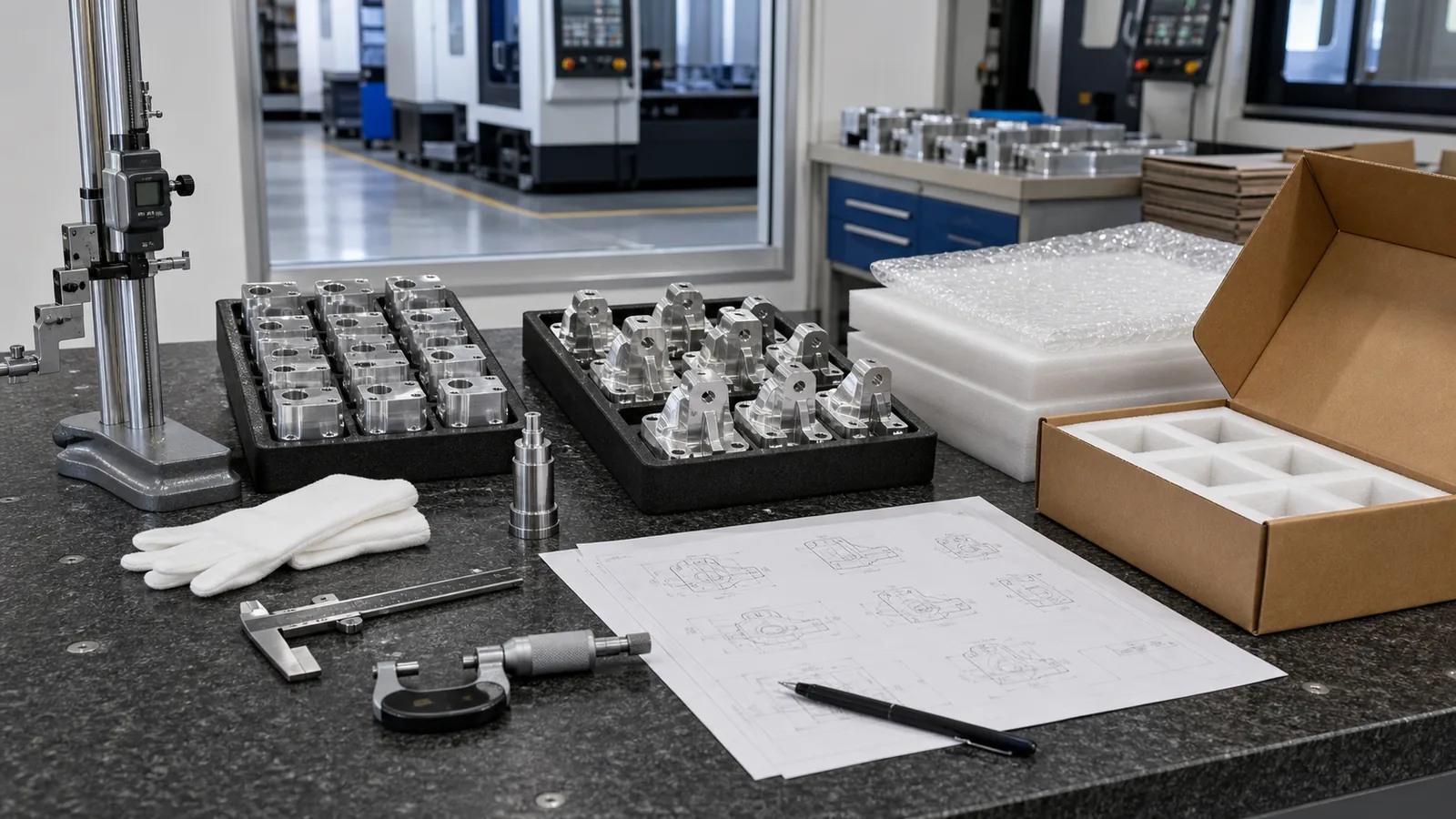
Inspection should follow the part's real risk. Standard dimensional checks may be sufficient for some features, while other projects may require a detailed dimensional report, material documentation, finish verification, first-article evidence, or a defined sampling plan.
The buyer should identify what must be measured, how acceptance will be decided, and which records must travel with the shipment. Do not assume that every possible report is automatically included in a standard machining price.
For repeat orders, confirm how nonconforming parts, rework, concessions, and corrective actions will be communicated. Fengnuo operates under an ISO 9001 quality management system; project-specific requirements should still be agreed during quotation. The public quality control and inspection page explains the general inspection workflow.
Step 7: Confirm Production Control and Communication
Once the order is released, establish a practical communication rhythm. The supplier should know who can approve technical questions, drawing changes, material substitutions, finish samples, and delivery decisions.
Useful production checkpoints may include material confirmation, first-piece approval, machining completion, finishing completion, final inspection, and shipment readiness. The number of checkpoints should match project risk; excessive reporting can add work without improving the result.
Any design change should trigger a revision review. Ask whether existing programs, fixtures, material, finished parts, and inspection plans are affected before accepting the new schedule and cost.
Step 8: Define Packaging, Shipping, and Import Responsibilities
A conforming part can still arrive unusable if cosmetic faces, sharp edges, threads, or precision interfaces are not protected. Specify individual wrapping, separators, caps, corrosion protection, clean packaging, part identification, or matched-set handling when the product requires it.
Before shipment, confirm:
the shipping address and receiving contact;
package count, approximate weight, and protection method;
the agreed Incoterm and who controls freight;
commercial invoice and customs-description requirements;
whether duties, taxes, brokerage, and destination charges are included;
whether partial shipment is allowed if priorities change.
Production time and transit time are different parts of the schedule. The article on CNC machining lead-time factors explains why drawing review, material, setup, finishing, inspection, factory loading, and logistics should be planned separately.
Common Ordering Mistakes to Avoid
Comparing quotes from different specifications. Make sure every supplier received the same revision and requirements.
Using the tightest tolerance everywhere. Apply demanding controls where function requires them.
Leaving finishing until after machining. Coating thickness, masking, appearance, and post-finish dimensions can affect the process plan.
Releasing production before prototype approval. Confirm fit, function, finish, and inspection evidence first when risk justifies it.
Assuming all reports and shipping costs are included. Ask the supplier to state inclusions and exclusions.
Changing files without revision control. Use one approved source of truth for purchasing, production, and inspection.
Final RFQ-to-Delivery Checklist
Before placing the order, confirm that the following points are documented:
final 3D model and 2D drawing revision;
material, finish, quantity, and development stage;
critical dimensions, datums, threads, and cosmetic areas;
approved DFM changes and quote assumptions;
prototype or first-article approval method;
inspection scope and required documents;
production communication and change-control contacts;
packaging, shipping term, import responsibility, and destination.
How Fengnuo Supports Overseas CNC Machining Orders
Fengnuo provides custom CNC machining for metal and engineering-plastic parts, with project review covering geometry, material, machining route, finishing, inspection, quantity, packaging, and delivery priorities.
The most useful starting point is a complete RFQ package. Fengnuo can then identify open questions and review which requirements are confirmed, which are project-dependent, and which decisions are needed before production.
Ready for an RFQ-to-Delivery Review?
Send your CAD files, drawing, material, quantity options, finish, inspection needs, destination, and target date for a project-specific manufacturing review.
FAQ
Can I request a CNC quote with only a 3D model?
A preliminary review may be possible, but a 2D drawing is useful for critical dimensions, tolerances, datums, threads, finishes, and notes that may not be defined in the model. Clearly identify any missing acceptance requirements.
Should I order one prototype or a small pilot batch?
The appropriate quantity depends on what must be learned. One part may support a fit check, while assembly trials, destructive testing, finish approval, or repeatability checks may require more parts. The quantity should match the validation plan.
How should I compare CNC machining quotes from China?
Compare the same revision, material, quantity, finish, tolerance, inspection, documentation, packaging, and shipping scope. Review assumptions and exclusions before comparing unit price.
When does CNC machining lead time begin?
The starting point varies by supplier and project. It may depend on payment, final file approval, material confirmation, DFM closure, or another release condition. Ask the supplier to define the start point in the quote.
What should be approved before repeat production?
Confirm the design revision, material, finish, critical measurements, accepted deviations, inspection method, packaging, and any prototype or first-article results that control the repeat order.