Our Team & Engineering Support
Behind every successful manufacturing project is a team that understands both engineering requirements and real production conditions. Our team is built around experienced engineers, machinists, and production specialists who work together to ensure that each project is executed accurately, efficiently, and consistently.
Rather than separating engineering from production, we operate with a collaborative structure that connects technical decision-making directly with machining and manufacturing processes. This approach allows us to provide practical engineering support that translates into stable production results.
1. An Engineering-Driven Manufacturing Team
Our engineering team has extensive hands-on experience in CNC machining, Swiss machining, mill-turn processing, sheet metal fabrication, and surface finishing. This experience allows our engineers to evaluate designs not only from a theoretical perspective, but also from a manufacturing standpoint.
By understanding tooling limitations, machining strategies, and process constraints, our engineers are able to assess feasibility early in the project. This reduces the risk of design-related issues during production and helps ensure that parts can be manufactured efficiently and consistently.
2. Close Collaboration Between Engineering and Production
One of the key strengths of our team structure is the close collaboration between engineering and production. Engineers work closely with machinists and production supervisors to align design intent with actual machining processes.
This collaboration enables faster problem-solving when challenges arise and ensures that process adjustments are made based on real machining feedback. By maintaining open communication between engineering and production, we are able to reduce errors, improve efficiency, and maintain stable quality throughout the manufacturing cycle.
3. Design for Manufacturability (DFM) Support
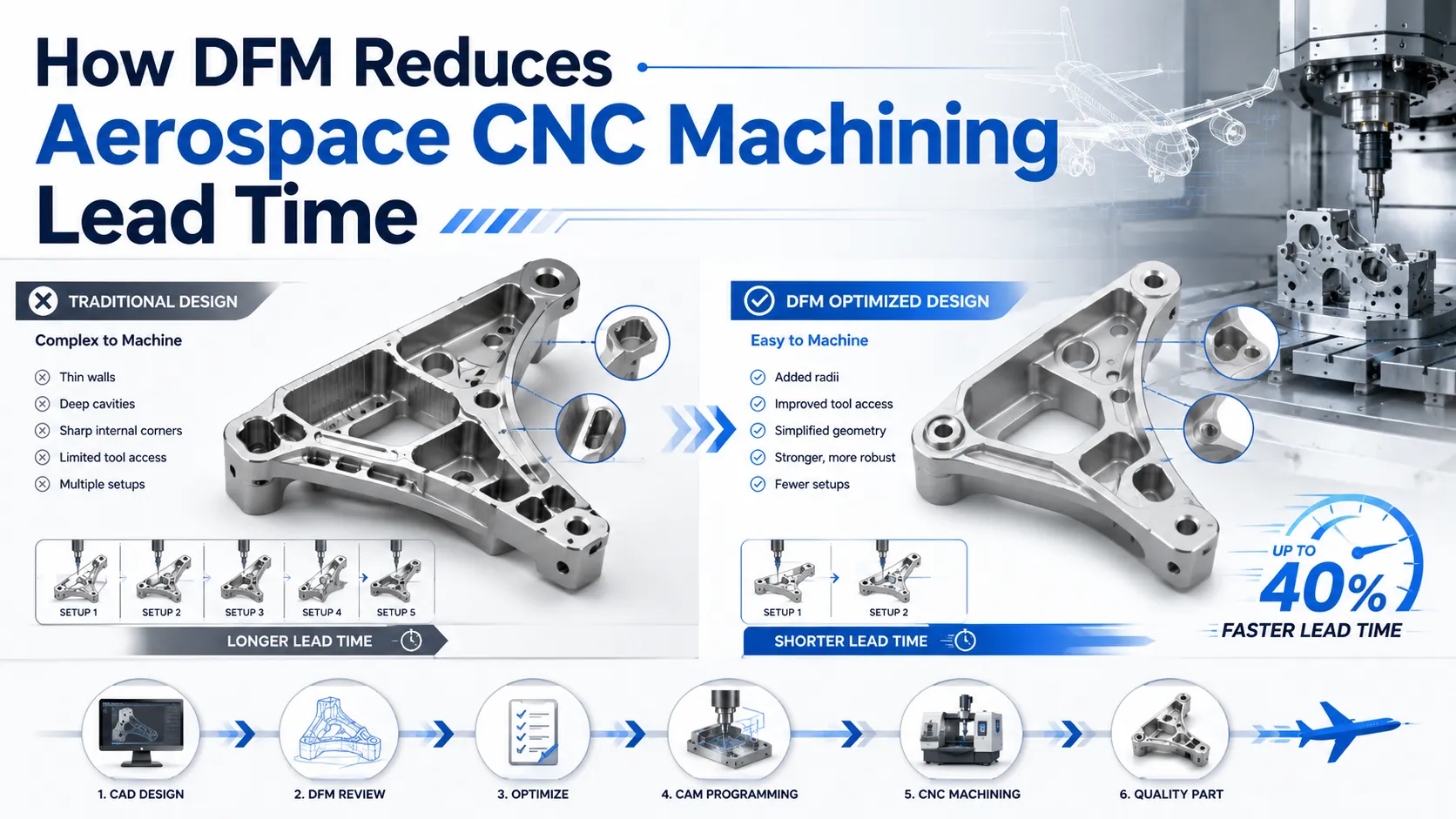
Design for Manufacturability is an important part of our engineering support. When required, we assist customers by reviewing drawings and CAD models to identify potential manufacturing challenges.
Our DFM support focuses on practical improvements such as optimizing tolerances, selecting suitable materials, adjusting feature geometry, and simplifying machining operations. These recommendations are aimed at improving production efficiency while maintaining functional requirements.
Rather than enforcing unnecessary changes, we work collaboratively with customers to balance performance, cost, and manufacturability.
4. Process Selection & Optimization
Selecting the right manufacturing process is essential for achieving desired performance and cost targets. Our engineering team evaluates each project to determine the most suitable machining and fabrication methods.
This includes decisions such as choosing between CNC milling, turning, Swiss machining, or mill-turn processing, as well as selecting appropriate surface finishing methods. By optimizing process selection, we help customers achieve better consistency, shorter lead times, and reduced production risk.
5. Material Selection Guidance
Material selection plays a critical role in part performance and manufacturing efficiency. Our team supports machining of a wide range of materials, including aluminum alloys, carbon steel, stainless steel, and engineering plastics.
When customers require guidance, we provide practical recommendations based on mechanical properties, environmental conditions, surface finishing compatibility, and machining characteristics. This helps customers make informed decisions that balance performance, durability, and cost.
6. Engineering Support from Prototype to Mass Production
Our engineering support covers the entire product lifecycle, from early-stage prototyping to stable mass production. During prototype development, we focus on validating design intent, identifying potential risks, and ensuring that parts can transition smoothly into production.
As projects move into mass production, our team emphasizes process stability, repeatability, and documentation. By maintaining consistent engineering oversight throughout the project lifecycle, we help customers achieve reliable production outcomes over time.
7. Technical Documentation & Drawing Interpretation
Clear and accurate documentation is essential for precision manufacturing. Our engineering team is experienced in interpreting technical drawings, GD&T specifications, and customer standards.
We ensure that all critical requirements are clearly understood before production begins. When clarification is needed, we communicate promptly with customers to avoid assumptions and potential errors. This disciplined approach helps prevent rework and ensures that finished parts meet customer expectations.
8. Problem Solving & Continuous Improvement
Manufacturing challenges are inevitable in custom production. Our team approaches problem-solving with a structured and practical mindset. When issues arise, we focus on identifying root causes and implementing corrective actions that prevent recurrence.
By analyzing machining processes, tooling performance, and inspection data, we continuously improve our manufacturing workflows. This commitment to continuous improvement helps enhance quality, efficiency, and reliability across projects.
9. Supporting Global Customers
With experience supporting customers across different regions and industries, our team understands the importance of clear communication and cultural awareness in global manufacturing projects.
We provide responsive engineering support throughout the project, including technical discussions, production updates, and post-delivery feedback. This level of support helps customers manage projects effectively, even when working across time zones.
10. Communication as a Core Engineering Skill
Effective engineering support extends beyond technical expertise. Clear communication is a core part of our team’s approach. We emphasize timely responses, transparent information sharing, and proactive updates throughout the manufacturing process.
By maintaining open communication channels, we help customers stay informed and confident in project progress. This approach reduces misunderstandings and builds trust over long-term cooperation.
11. Training & Knowledge Sharing
To maintain technical competence, our team continuously invests in training and knowledge sharing. Engineers and production staff regularly exchange insights on machining techniques, tooling improvements, and process optimization.
This internal knowledge-sharing culture allows us to adapt to new manufacturing challenges and improve our ability to support complex projects.
12. A Team Built for Long-Term Collaboration
Our team is structured to support long-term manufacturing partnerships. Rather than focusing on short-term transactions, we aim to become an extension of our customers’ engineering and production teams.
By combining technical expertise, manufacturing experience, and responsive communication, we provide engineering support that contributes to stable, reliable production outcomes.
13. Commitment to Reliable Engineering Support
Engineering support is not an optional service—it is a fundamental part of how we operate. From the first technical discussion to final production delivery, our team remains actively involved to ensure that each project meets specifications and performance expectations.
By aligning engineering decisions with real manufacturing conditions, we help customers achieve consistent results and long-term success in their manufacturing programs.