
CNC Machining MOQ in China: What Buyers Should Expect for Prototypes and Small Batches
When buyers ask a CNC machining supplier in China about minimum order quantity, they often expect one simple number. In practice, there is rarely a single MOQ that applies to every custom part.
A supplier may be technically able to machine one part, but the economical quantity depends on programming, setup, workholding, material purchase, finishing, inspection, packaging, and the risk of producing a design that has not yet been validated.
The useful question is therefore not only “What is your MOQ?” It is “What quantity makes sense for this development stage, and what changes would make a smaller order practical?”
Quick Answer: Is There a Standard CNC Machining MOQ in China?
There is no reliable industry-wide MOQ for custom CNC machining. Prototype work may begin with one or a few parts, while finishing batches, purchased material, special tooling, inspection requirements, or production scheduling can create a higher practical minimum.
For most buyers, the best approach is to request separate pricing for a prototype quantity, a pilot quantity, and the expected repeat quantity. This reveals how setup cost is distributed and prevents a low unit price from driving an unnecessarily large purchase.
MOQ Is Not the Same as Production Capacity
A high-capacity CNC factory can still accept development work, and a small workshop can still require a larger order for a difficult part. MOQ is mainly a commercial and process-planning decision, not a direct measure of machine capacity.
The supplier is balancing fixed preparation work against the number of usable parts. That preparation may include reviewing drawings, programming toolpaths, preparing tools, building soft jaws or fixtures, proving the first setup, checking critical dimensions, and coordinating outside finishing.
Those activities may be similar whether the order contains two parts or twenty. As quantity increases, the fixed work is distributed across more pieces, which usually lowers unit cost. The buyer should still compare that saving against design-change risk, inventory cost, and actual demand.
What Determines the Practical Order Quantity?
Programming and Machine Setup
A simple plate with accessible features may require limited preparation. A multi-sided housing, thin-wall frame, deep cavity, or tightly related feature set can require more programming, setup planning, probing, and first-piece verification. Complex preparation makes a very small order less economical even when machining time per part is moderate.
Workholding and Special Tooling
Standard vises and common tools reduce the fixed cost of starting an order. Custom soft jaws, dedicated fixtures, long-reach tools, special thread gauges, or unusual cutters add preparation that must be justified by the order or by expected repeat demand.
Material Form and Purchase Quantity
Common aluminum, steel, stainless steel, and engineering-plastic stock may be easier to source in small amounts. Uncommon alloys, large billets, special tempers, traceable material, or unusual plate thicknesses may be sold in standard lengths or purchase lots. The supplier should explain whether excess material can be retained for a repeat order or must be charged to the first batch.
Geometry and Cycle Time
Part size, stock removal, tool access, number of setups, thin walls, deep pockets, small internal radii, threads, and deburring all influence the production route. A low quantity does not automatically mean a low project cost if each part requires substantial machine time or manual finishing.
Surface Finishing and Color Control
Anodizing, plating, painting, powder coating, passivation, polishing, and blasting may be processed in batches. A finishing supplier may charge a minimum batch fee even when the CNC factory can machine only a few parts. Color matching, masking, cosmetic standards, and rework allowances can also affect the recommended quantity.
Inspection and Documentation
Standard dimensional inspection is different from a detailed measurement report, first-piece approval, material traceability package, or extensive CMM program. Inspection preparation can be a meaningful fixed cost. Buyers should identify critical features and required documents instead of applying the same reporting level to every dimension.
Packaging and Export Logistics
Small international shipments can carry a high logistics cost per part. Cosmetic surfaces, sharp components, heavy parts, or matched assemblies may also require individual protection. It can be useful to compare one consolidated pilot shipment with several urgent shipments, but only after the design is stable enough to justify the quantity.
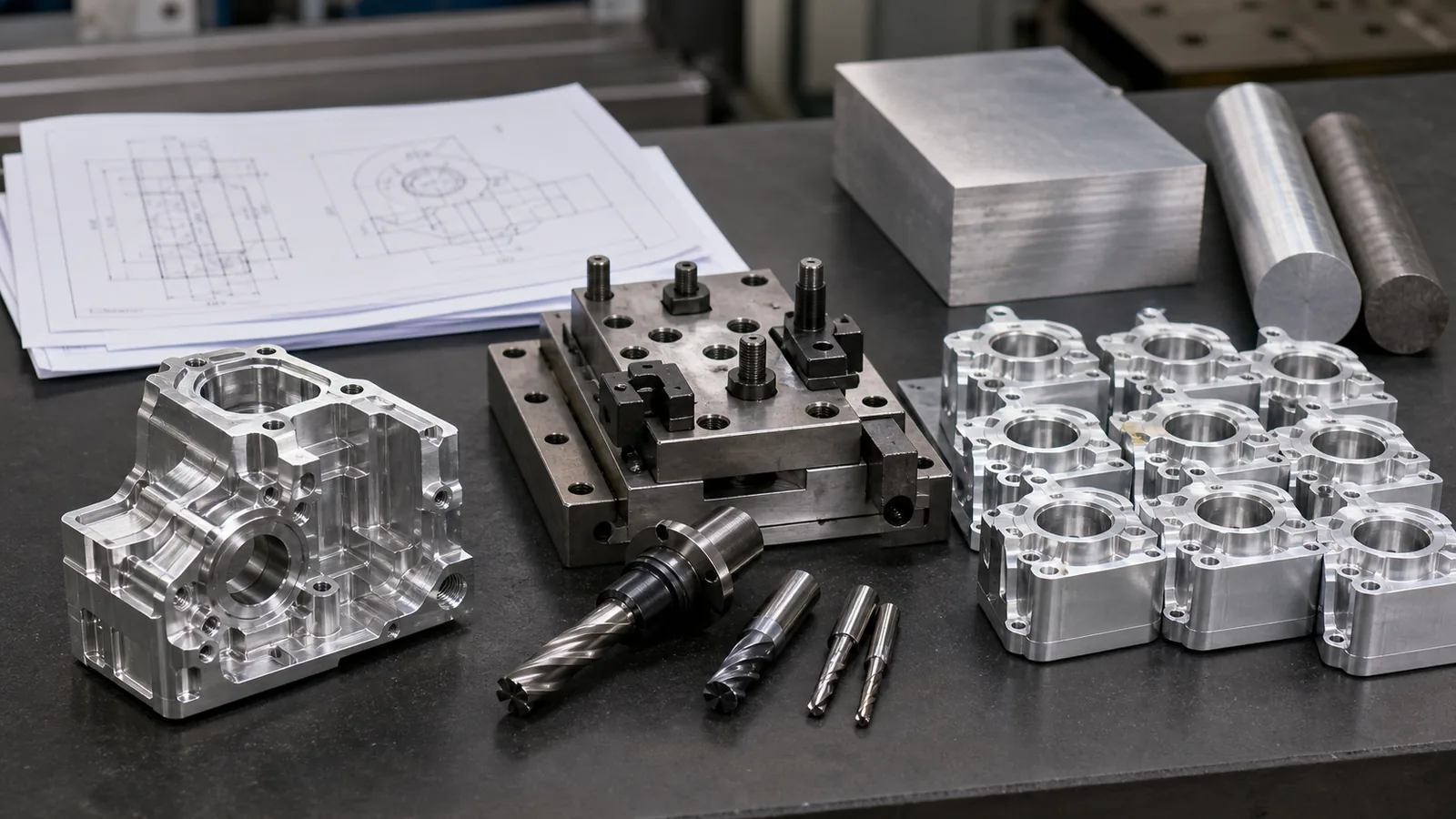
Prototype, Pilot Build, and Repeat Order Need Different Quantities
Prototype Quantity
The purpose of a prototype order is to learn. Quantity should be sufficient to verify geometry, material behavior, assembly, critical interfaces, and the intended finish without creating unnecessary inventory. If destructive testing, multiple assemblies, or alternative designs are involved, one piece may not provide enough evidence.
Pilot-Build Quantity
A pilot build tests repeatability rather than only the best first part. It can reveal variation between setups, finishing consistency, assembly time, packaging risk, and whether the drawing communicates the requirement clearly. The pilot quantity should reflect how many units are needed for realistic assembly and validation, not an arbitrary supplier threshold.
Repeat Small-Batch Quantity
Once the design and process are stable, the buyer can evaluate repeat batches around demand, inventory policy, fixture reuse, material purchasing, finishing batches, and delivery cadence. A repeat order may achieve better economics because programs, fixtures, inspection plans, and process knowledge already exist.
Need to compare prototype and small-batch quantities?
Send the CAD model, drawing, material, finish, quantity options, inspection requirements, and target date. Fengnuo can review which costs are fixed, which scale with quantity, and what information is needed before production. Request a CNC quantity and cost review.
How Buyers Can Make a Small CNC Order More Practical
Separate critical from noncritical tolerances. Identify the dimensions that control function, assembly, sealing, motion, or inspection.
Use common stock where the design permits. Confirm available material form, alloy, and condition before locking the design.
Reduce avoidable setups. Improve tool access, internal corner radii, hole depth, and feature orientation where function allows.
Clarify cosmetic zones. Define which surfaces are visible and where minor handling or fixture marks are acceptable.
Choose documentation intentionally. Request reports for critical requirements rather than treating every feature as equally important.
Plan the next quantity. Tell the supplier whether the order is a one-time prototype, a pilot build, or the first step toward repeat production.
These changes do not guarantee a particular MOQ. They give the supplier better information to propose a suitable route and explain the cost difference between quantity options.
Do Not Optimize Unit Price Alone
A larger order may produce a lower unit price while increasing total project risk. If the drawing changes after testing, unused parts can cost more than the apparent saving. The right purchasing decision considers total spend, validation confidence, expected demand, storage, engineering changes, and the cost of a delayed product launch.
For an unproven design, a smaller learning batch is often more valuable than the lowest theoretical unit price. After approval, the buyer can use the pilot results to negotiate repeat-batch economics with better information.
Questions to Ask a CNC Machining Supplier in China
Can you quote prototype, pilot, and repeat quantities separately?
Which costs are one-time setup costs and which repeat on every order?
Does the material require a minimum purchase lot?
Can fixtures or soft jaws be reused for future orders?
Does the surface-finishing process have a separate batch minimum?
What inspection is included, and which reports add preparation work?
How will engineering revisions be controlled between batches?
How will visible surfaces and export packaging be protected?
A reliable answer should explain the manufacturing route and assumptions. A bare MOQ number without drawing review is not enough for a custom part.
What to Send for an Accurate MOQ and Quote Review
Prepare the following information before requesting a quote:
3D CAD file and a controlled 2D drawing;
material grade, condition, and acceptable alternatives;
prototype, pilot, and expected repeat quantities;
critical dimensions, tolerances, threads, and datum structure;
surface finish, color, masking, and cosmetic zones;
inspection reports, material documents, or traceability requirements;
mating components, inserts, and purchased hardware; and
target date, shipping destination, and development milestone.
Buyers who are still defining the manufacturing route can review Fengnuo's practical CNC machining buyer guide. For a broader view of prototype and repeat orders, see small-batch CNC machining for custom parts.
How Fengnuo Supports Prototype and Small-Batch Orders
Fengnuo provides custom CNC machining services for metal and engineering-plastic components. Project review can cover geometry, material, workholding, finishing, inspection, quantity options, and delivery priorities.
The company operates under an ISO 9001 quality management system. Project-specific inspection and documentation requirements should be confirmed during quotation. Fengnuo's public quality control and inspection page provides additional information about the inspection workflow.
Ready to Compare Prototype and Small-Batch Pricing?
Send your files, material, finish, quantity options, critical requirements, and target date for a project-specific manufacturing review.
FAQ
Can a CNC supplier machine only one prototype?
It may be technically possible, depending on the part and project. Whether one part is commercially practical depends on setup, material, tooling, finishing, inspection, and the amount of validation required.
Why does unit price fall when quantity increases?
Programming, setup, workholding, first-piece verification, and inspection planning are fixed or partly fixed activities. More usable parts distribute those costs, although machine time, material, finishing, and inspection still increase with quantity.
Does a low MOQ always mean a better supplier?
No. Buyers should also evaluate process understanding, communication, quality control, revision management, finishing coordination, and whether the supplier explains the assumptions behind the quote.
Should I order extra parts for testing?
That depends on destructive testing, assembly needs, process risk, finish acceptance, and the number of design alternatives. Define how each part will be used before selecting the quantity.
Can a supplier keep material or fixtures for repeat orders?
Sometimes, but storage, ownership, identification, material condition, revision control, and reuse terms should be agreed during quotation. Do not assume they will be retained automatically.