
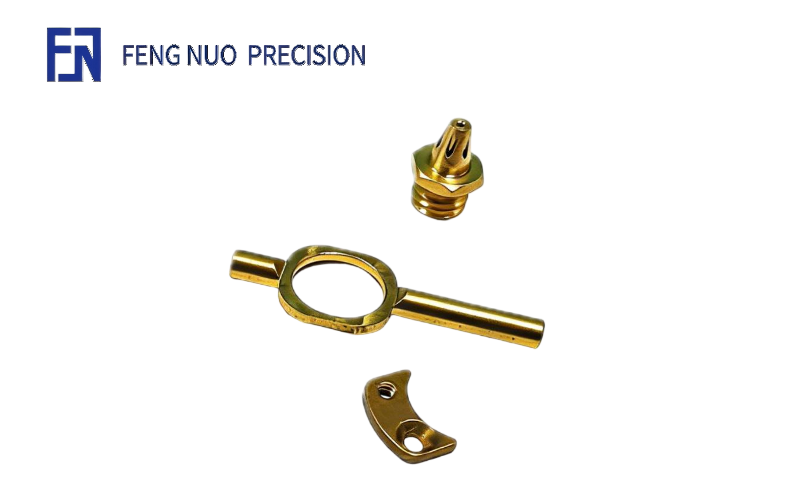
Swiss-Type CNC Machined Brass Components for Medical Devices
In the medical device industry, precision and reliability are fundamental requirements. Even small mechanical components can significantly influence the safety, performance, and longevity of a device. Brass components, when precisely machined and properly finished, are widely used in various medical assemblies due to their excellent machinability, dimensional stability, and corrosion resistance.
Our Swiss-type CNC machined brass components for medical devices are manufactured with tight tolerance control, fine surface finishing, and stable batch repeatability. Using advanced Swiss-type CNC lathes, we produce high-precision small-diameter parts that meet the functional and structural requirements of modern medical equipment.
Swiss-type turning technology is particularly suitable for producing miniature, elongated, or complex brass components where concentricity, thread precision, and consistent geometry are critical.
Why Swiss-Type CNC Machining for Brass Medical Components?
Medical brass components commonly include:
Fluid control fittings
Micro threaded connectors
Valve stems
Guide sleeves
Miniature bushings
Instrument interface parts
Precision spacers
Calibration components
These parts often require micron-level dimensional control and smooth thread profiles to ensure leak-free performance and reliable assembly.
Swiss-type CNC machines support guide bushing systems that stabilize the workpiece close to the cutting zone. This significantly reduces deflection and vibration during machining, enabling high concentricity and superior surface finish—especially important for slender or small-diameter brass parts.
For medical applications involving fluid systems or instrument assemblies, this level of machining precision ensures proper sealing and alignment.
Advantages of Brass in Medical Applications
Brass offers several benefits in selected medical device components:
Excellent machinability for complex geometries
Stable dimensional performance
Good corrosion resistance
Smooth thread formation
Reliable mechanical strength for fittings
Electrical conductivity for specific instrument interfaces
While stainless steel is commonly used for structural medical parts, brass is often preferred for precision fittings, connectors, and fluid management components where machinability and sealing performance are key priorities.
Material selection is based on the intended device function and compatibility with sterilization methods and cleaning agents.
Compliance with Medical Manufacturing Standards
Medical device production requires strict quality management and traceability.
Our machining processes are structured to support:
ISO 9001 quality management systems
ISO 13485-oriented production practices
First Article Inspection (FAI)
Material certification and traceability
Documented dimensional inspection procedures
Critical characteristics such as diameter tolerance, thread accuracy, concentricity, and surface finish are inspected using calibrated measuring equipment.
For fluid-contact components, leak-tight performance and precise thread engagement are carefully evaluated.
Engineering Considerations in Brass Medical Components
Producing high-quality brass medical parts requires attention to several technical factors:
1. Thread Accuracy
Precision threads ensure secure and leak-free assembly in medical fluid systems.
2. Surface Finish
Smooth surfaces minimize contamination risk and improve sealing performance.
3. Dimensional Stability
Consistent geometry ensures reliable integration within complex assemblies.
4. Sterilization Compatibility
Material selection must support exposure to cleaning and sterilization procedures.
Optimized cutting speeds and tool geometry are applied to achieve burr-free edges and accurate profiles.
Post-Processing and Surface Treatments
Depending on application requirements, brass medical components may undergo additional finishing processes such as:
Deburring and edge rounding
Fine polishing
Surface cleaning
Nickel or other protective plating (if required)
Laser marking for identification and traceability
Surface treatment enhances corrosion resistance and ensures long-term durability in clinical environments.
Additional Swiss-Type CNC Capabilities for Medical Industry
In addition to brass components, our Swiss-type CNC machining services support:
Stainless steel precision shafts
Titanium miniature parts
Aluminum medical device components
Micro connector pins
Custom prototype production
High-volume small-diameter parts
Swiss-type machining is particularly advantageous for large production volumes of precision small components requiring consistent dimensional control.
Commitment to Medical Precision Manufacturing
Medical equipment manufacturers depend on precision-machined components that deliver stable performance and documented quality assurance. Our Swiss-type CNC machining capabilities ensure brass medical device components that meet strict tolerance requirements and support reliable device functionality.
From prototype development to scalable serial production, we emphasize dimensional accuracy, surface integrity, and structured quality inspection.
Whether supporting fluid control system manufacturers, diagnostic device producers, or surgical instrument suppliers, our Swiss-type CNC machined brass components provide dependable performance for advanced medical applications.