
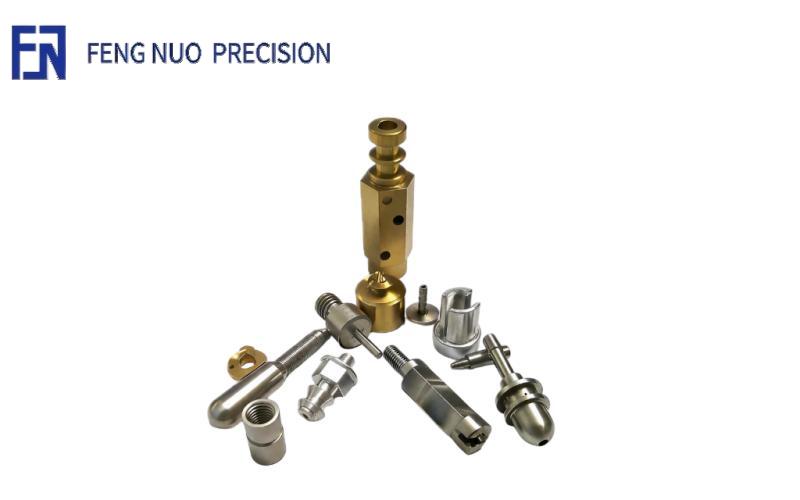
Swiss-Type CNC Machined Stainless Steel & Brass Components for Medical Device
The medical device industry requires precision-engineered components that meet strict standards for accuracy, material reliability, and long-term performance. From surgical instruments and diagnostic systems to fluid control devices and minimally invasive tools, small machined parts often play a critical role in ensuring safe and consistent operation.
Our Swiss-type CNC machined stainless steel and brass components for medical devices are designed to deliver tight tolerance control, smooth surface finishes, and stable mass production capability. Using advanced Swiss-type CNC turning technology, we manufacture complex miniature components with high concentricity, precise threading, and repeatable dimensional accuracy.
Swiss-type machining is particularly suitable for producing small-diameter, high-precision parts used in medical assemblies where alignment, sealing, and mechanical consistency are essential.
Advantages of Swiss-Type CNC Machining in Medical Applications
Medical device components often include:
Precision shafts and rods
Micro connector pins
Valve stems and control shafts
Threaded fittings
Guide sleeves
Small bushings
Instrument tips
Fluid system connectors
These components typically feature small diameters, extended lengths, and complex geometries. Swiss-type CNC lathes utilize a guide bushing system that supports the material close to the cutting zone, minimizing deflection and vibration. This results in improved dimensional stability and enhanced surface finish.
For medical applications, where tolerances can directly affect device performance, this level of precision is critical.
Material Selection: Stainless Steel and Brass
Both stainless steel and brass are widely used in medical equipment manufacturing, depending on functional requirements.
Stainless Steel
Common grades such as SUS304 and SUS316/316L are selected for:
High corrosion resistance
Compatibility with sterilization processes
Mechanical strength
Long-term durability
Suitability for fluid-contact components
Stainless steel is frequently used in surgical tools, instrument shafts, and fluid system assemblies.
Brass
Brass is selected for applications requiring:
Excellent machinability
Good corrosion resistance
Reliable electrical conductivity (if required)
Smooth thread formation
Stable dimensional performance
Brass components are often used in medical fluid control systems, connector fittings, and specialized instrument assemblies.
Material traceability and batch documentation are maintained to support quality system compliance.
Medical Industry Manufacturing Standards
Medical device components must comply with strict quality management frameworks to ensure safety and regulatory alignment.
Our production processes are structured under:
ISO 9001 quality management systems
ISO 13485-oriented manufacturing practices
First Article Inspection (FAI)
Material certification and traceability
Controlled process documentation
Dimensional verification is performed using coordinate measuring machines (CMM), precision micrometers, and thread gauges to ensure tolerance accuracy.
Critical characteristics such as concentricity, surface finish, and thread precision are carefully inspected.
Engineering Considerations for Medical Components
Producing stainless steel and brass medical components requires careful attention to several technical aspects:
1. Dimensional Accuracy
Precise tolerances ensure reliable assembly and device performance.
2. Surface Smoothness
Smooth surfaces minimize contamination risk and support sterilization compatibility.
3. Thread Integrity
Accurate thread profiles are essential for secure connections in fluid systems.
4. Material Compatibility
Selected materials must withstand repeated sterilization cycles and exposure to cleaning agents.
Optimized machining parameters and precision tooling help prevent burr formation and maintain surface integrity.
Post-Processing and Surface Treatment
Depending on the application, medical components may undergo additional finishing processes such as:
Deburring and edge rounding
Fine polishing
Passivation (for stainless steel)
Ultrasonic cleaning
Surface plating (for brass components, if required)
Laser marking for traceability
Surface finishing enhances corrosion resistance and ensures cleanliness suitable for medical environments.
Additional Swiss-Type CNC Capabilities
Beyond stainless steel and brass medical parts, our Swiss-type CNC machining services support:
Titanium miniature components
Aluminum precision parts
Micro threaded rods
Small-diameter shafts
Custom prototype development
High-volume serial production
Swiss-type machining is particularly advantageous for producing large quantities of small, complex components with consistent quality.
Commitment to Medical Precision and Reliability
Medical equipment manufacturers require components that combine material reliability, dimensional precision, and repeatable quality. Our Swiss-type CNC machining expertise enables the production of stainless steel and brass parts that meet strict medical application requirements.
From prototype sampling to full-scale production, we focus on precision control, documented inspection procedures, and stable process repeatability.
Whether supporting surgical instrument manufacturers, diagnostic equipment producers, or fluid control system developers, our Swiss-type CNC machined components contribute to safe, reliable, and high-performance medical devices.