
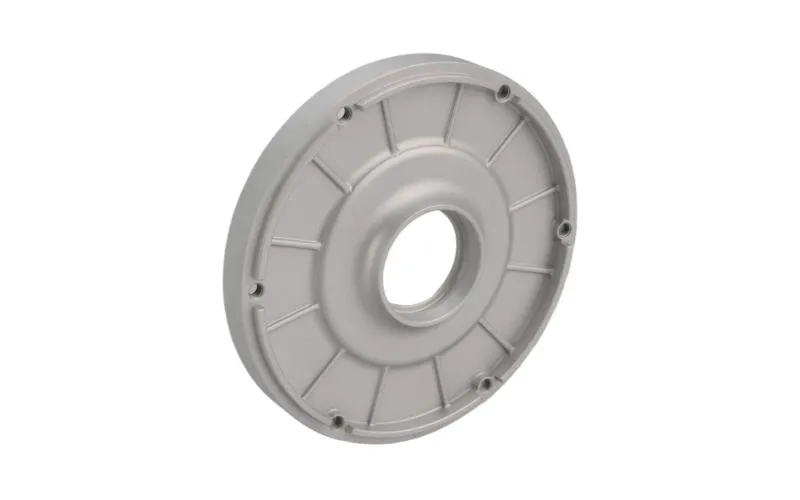
Sandblasting
Sandblasting is a surface treatment process that uses high-speed abrasive media to impact the workpiece surface. It is mainly used to improve surface consistency, hide light tool marks, and create a matte or textured finish.
It does not significantly change the overall dimensions of the part, but it can greatly improve the visual appearance and surface feel.
Quick Overview of Sandblasting Results
| Item | Description |
|---|---|
| Process Features | Improves surface consistency, hides light machining marks, reduces reflection, and creates a matte textured appearance |
| Suitable Materials | Aluminum alloys (such as 6061, 6063, 7075), as well as some other metals and plastics |
| Surface Finish | Matte, fine texture, sand-like feel, non-glossy surface with subtle visual uniformity |
Note: Color, corrosion resistance, and wear resistance are usually achieved through anodizing or other follow-up treatments, not by sandblasting alone.
Sandblasting Texture and Parameter Reference Table
| Grade | Abrasive Size | Roughness Ra (μm) | Visual Effect | Surface Feel | Typical Applications |
|---|---|---|---|---|---|
| Fine Sandblasting | 180–220 mesh | 0.8–1.5 | Uniform and delicate | Smooth, with almost no obvious graininess | 3C housings, appearance parts |
| Medium Sandblasting | 80–120 mesh | 2.0–3.5 | Visible texture | Slight grain sensation | Industrial equipment, brackets |
| Coarse Sandblasting | 40–60 mesh | 4.0–6.0 | Strong matte texture | Obvious graininess | Functional parts, anti-slip surfaces |
Influence on Dimensional Tolerance
Typical material removal from sandblasting is about 0.005–0.025 mm
(usually less for fine sandblasting and more for coarse sandblasting).For general appearance surfaces, the dimensional effect is often negligible.
For fitting surfaces, threaded holes, or sealing areas, masking protection or machining allowance is recommended.
If anodizing is required after sandblasting, the anodizing film thickness should also be considered
(typically around 0.010–0.025 mm) for overall tolerance evaluation.
Typical Application Industries
3C Electronics: housings, frames, panels
(improves texture and reduces glare)Industrial / Automation Equipment: control boxes, covers, brackets
(creates a more uniform appearance)Medical / Automotive: instrument housings, aluminum functional parts
(provides a good base for fine texture and further surface treatment)
FAQ
Can sandblasted parts be shipped directly?
Yes, they can. However, bare aluminum surfaces are more likely to oxidize or show fingerprints, so proper sealing, packaging, or further surface treatment is recommended as soon as possible.
Will sandblasting cause the part to go out of tolerance?
In normal areas, the impact is usually very small. For critical fitting areas, masking or reserved machining allowance is recommended, since the material removal is typically around 0.005–0.025 mm.
How should the required sandblasting effect be specified?
It is recommended to confirm the requirement using mesh size + Ra value + actual sample reference. This is much clearer than using vague descriptions such as “a little finer.”
Conclusion
Sandblasting is an efficient way to upgrade a machined part into a more refined finished product.
At the early stage of a project, clearly defining the sandblasting parameters, tolerance requirements, and any follow-up process such as anodizing helps improve quality control and customer acceptance.