Common CNC Machining Quality Issues and Practical Solutions
How We Prevent Problems Before They Reach You
Hi procurement friends, this is Jake again.
Last time we talked about tolerance inspection. Today, let’s address the real-world quality issues that show up most often in CNC machining—and more importantly, how we prevent them before they become your problem.
You may have received parts that are:
“Almost” the right size
Not smooth enough on the surface
Hard to assemble because holes don’t line up
These are common headaches in machining. We deal with them every day. And from experience, I can tell you this:
Preventing problems early is ten times more effective than fixing them later.
1. Dimensional Out-of-Tolerance: It’s Not Just “One Wrong Cut”
What it looks like
A dimension that should be 10.00 mm measures 10.05 mm or 9.98 mm.
This is the most common—and the most critical—issue.
How we solve it
Prevention first:
First Article Inspection (FAI) is mandatory, never a formality
We use CMM to verify all critical dimensions before mass production
During production, we perform in-process inspections every 20–30 parts, especially on key dimensions
Root cause analysis:
When a deviation appears, we don’t guess:
Tool wear: Cutting tools naturally dull over time, causing size drift
Thermal expansion: Machines heat up during long runs, affecting accuracy
Our countermeasures include:
Temperature-controlled workshops
Warm-up routines for machines
Tool life monitoring and scheduled replacement
Extra confidence for you:
For important orders, we proactively provide SPC (Statistical Process Control) charts for critical dimensions, so you can see process stability—not just final results.
2. Poor Surface Finish or Tool Marks: “Looks Matter”
What it looks like
Visible machining lines, uneven gloss, or a surface that feels rough—sometimes affecting both appearance and assembly.
How we solve it
Optimize cutting parameters:
Surface issues are often caused by mismatched:
Spindle speed
Feed rate
Depth of cut
Our programmers and operators fine-tune parameters based on material type—aluminum, steel, stainless steel all behave differently.
Use the right tools at the right time:
Finishing operations use new or dedicated finishing tools
Coolant concentration and cleanliness are monitored to ensure proper cooling and chip evacuation
Add the right finishing step:
When appearance requirements are high, we add polishing, bead blasting, or other surface treatments to ensure the final parts meet both visual and tactile expectations.
3. Geometric Tolerance Errors: The Invisible Misalignment
What it looks like
Holes that aren’t concentric, faces that aren’t flat, or positional tolerances that cause assembly issues.
These are often more problematic than simple size deviations.
How we solve it
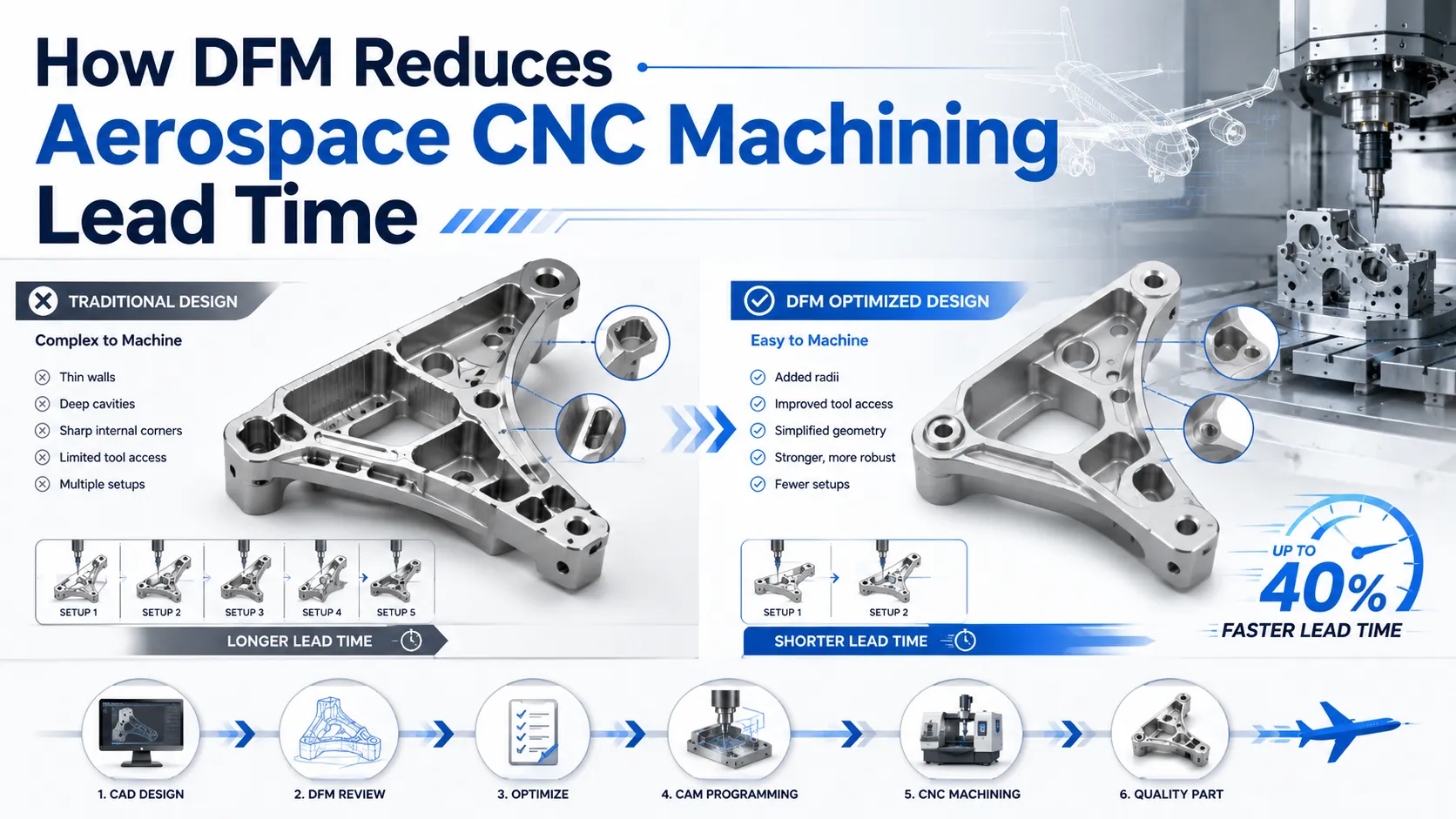
One setup whenever possible:
For features with positional relationships, we design the process so they’re machined in a single setup. This minimizes cumulative errors caused by repeated repositioning.
CMM verification:
Geometric tolerances cannot be reliably checked with calipers.
We use CMM for:
Concentricity
Flatness
Position
Runout
Both first articles and periodic samples undergo full GD&T inspection.
Fixture control:
Fixtures are the foundation of consistency. We regularly inspect:
Locating surfaces
Clamping forces
This ensures every part is held and machined the same way, every time.
4. Burrs Not Fully Removed: Small but Dangerous
What it looks like
Sharp edges or burrs around holes and edges—uncomfortable to handle, unsafe, and problematic for coating or assembly.
How we solve it
Deburring built into the program:
Our CNC programs include chamfering and deburring tool paths to remove most burrs directly on the machine.
Dedicated manual deburring station:
Every part goes through a mandatory deburring step using:
Files
Scrapers
Ultrasonic deburring (when needed)
This is not optional—it’s a required step before shipment.
Practical Advice for Buyers
When evaluating a CNC supplier, ask this question:
“How do you specifically prevent and control these common quality issues?”
A factory that can clearly explain prevention methods, inspection points, and corrective actions is far more reliable than one that simply says, “Don’t worry, we’ll do it well.”
Our Quality Philosophy
Good quality is not something you “inspect in” at the end.
It’s something you systematically prevent through process planning, execution, and control.
The time and effort we invest upfront—in machining strategy, tooling, and in-process control—is exactly what helps you avoid:
Rework
Delays
Line stoppages
I hope this honest breakdown helps you feel more confident the next time you receive CNC machined parts—whether from us or any supplier.
If you ever have a specific quality concern, reach out to me directly.
Let’s solve it early, clearly, and professionally—so cooperation stays smooth and predictable.
— Jake