
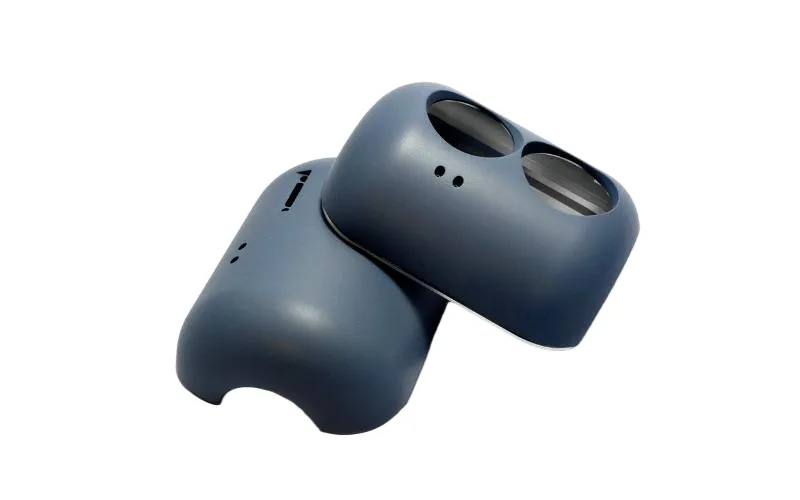
Powder coating
Powder coating is a dry finishing process used to give metal parts a durable, decorative, and environmentally friendly surface layer. The powder is electrostatically applied to the part surface and then cured at high temperature to form a strong coating that does not peel off easily.
Customer Benefits
Rich color options
Available in a wide range of RAL and Pantone colorsThicker and more durable coating
Excellent resistance to impact, scratches, and daily wearEnvironmentally friendly
Low VOC emissions, recyclable powder, suitable for export manufacturing requirementsEfficient for mass production
One-pass coating with no need for liquid solvents, helping control cost
What Is Supported?
| Item | Description |
|---|---|
| Suitable Materials | Iron, steel, aluminum alloy, stainless steel, galvanized steel, and other conductive metals |
| Coating Thickness | 50–150 μm as standard, up to 300 μm for special requirements |
| Common Colors | RAL color card series, Pantone colors, and customized colors |
| Surface Gloss | Matte (≤20 GU), semi-gloss (30–70 GU), high gloss (80–95 GU) |
| Surface Texture | Smooth, sand texture, wrinkle, textured, metallic, wood-look, and more |
| Corrosion Resistance | Typically 500–3000+ hours neutral salt spray, depending on coating system |
| Weather Resistance | Around 10–15 years for standard outdoor use, 15–20 years for fluorocarbon systems, and 20+ years for high-weather-resistance powder systems |
Note: Powder coating requires high-temperature curing, usually around 160–200°C, so the base material must be able to withstand the curing temperature.
Coating Thickness and Corrosion Resistance
| Grade | Thickness (μm) | Salt Spray Resistance (Hours) | Weather Resistance | Typical Applications |
|---|---|---|---|---|
| Standard Grade | 50–80 | 500+ | 5–10 years | Indoor equipment, general industrial parts |
| Enhanced Grade | 80–120 | 1000+ | 10–15 years | Architectural profiles, outdoor facilities |
| Heavy-Duty Anti-Corrosion Grade | 100–150 | 2000–3000+ | 15–20+ years | Marine environments, chemical equipment, automotive chassis parts |
Reference only: Actual performance depends on coating thickness, pretreatment quality, powder type, and application environment. For example, fluorocarbon powder usually performs better than polyester in UV resistance, while polyester is often more cost-effective.
Powder Type Selection Reference
| Powder Type | Main Features | Weather Resistance | Typical Applications |
|---|---|---|---|
| Epoxy | Strong adhesion and chemical resistance, but poor UV resistance | Poor (indoor only) | Indoor industrial parts, pipes, cabinets |
| Polyester | Good weather resistance, impact resistance, and color stability | Good | Outdoor products, building materials |
| Epoxy / Polyester Hybrid | Balanced overall performance and cost-effective | Moderate | General indoor and semi-outdoor products, appliance housings |
| Fluorocarbon (PVDF) | Excellent weather resistance, UV resistance, fade resistance, and marine durability | Excellent | High-end curtain walls, marine-related equipment |
Influence on Dimensions
Typical one-side coating build-up is around 0.025–0.150 mm, depending on the coating thickness
For threaded holes, precision holes, and critical fitting surfaces, masking is usually required, otherwise the coating may affect assembly
For general appearance surfaces, the dimensional effect is usually small
On complex shapes, edge areas may sometimes have thinner or thicker coating, so enough design clearance should be considered in advance
Tip: For fitting areas with strict tolerance requirements, it is recommended to define masking or post-coating correction in advance.
Typical Applications
| Industry | Value Provided by Powder Coating | Typical Parts |
|---|---|---|
| Building Materials | Strong weather resistance, rich colors, good fade resistance | Aluminum doors and windows, curtain walls, guardrails |
| Automotive | Durable surface, impact resistance, customizable appearance | Wheels, frames, engine covers, chassis parts |
| Home Appliances | Better appearance consistency, scratch resistance, easy cleaning | Refrigerator panels, air conditioner housings, washing machine panels |
| Hardware | Improves product finish and helps prevent corrosion | Hinges, locks, tools, lighting housings |
| Industrial Equipment | Thick protective coating with good chemical resistance | Cabinets, pipes, mechanical structural parts |
FAQ
1) What is the difference between powder coating and spray painting?
Powder coating forms a thicker and more durable coating. It is more environmentally friendly because it contains little or no VOCs. Spray painting is a wet coating process, usually with a thinner layer, but it can provide smoother decorative effects in some applications.
2) Can powder-coated parts be shipped directly?
Yes. After curing, powder coating becomes a finished surface layer with good resistance to scratches, wear, and everyday handling, so it can usually be shipped directly as a finished product.
3) Will powder coating affect threaded holes?
Yes, it can. The coating may build up inside threaded holes and reduce the effective size, so masking or post-coating thread recovery is usually recommended.
4) Can powder coating hide scratches and dents?
Not completely. It can cover very minor surface imperfections, but deeper scratches or dents may still remain visible after coating. If appearance is important, surface preparation should be done before coating.
5) How should powder coating requirements be specified?
A clear requirement usually includes:
1) base material
2) corrosion resistance target (salt spray hours)
3) coating thickness (μm)
4) color (RAL / Pantone)
5) gloss level (matte / semi-gloss / high gloss)
6) whether masking is needed for fitting areas
6) Can aluminum parts be powder coated?
Yes. Powder coating is a very common finishing method for aluminum parts. With proper pretreatment, it can provide both decorative appearance and strong corrosion resistance.
Conclusion
Powder coating is a practical finishing solution for metal parts that need better appearance, stronger surface protection, and long-term durability. It is especially suitable for projects that require rich color options, thicker coatings, and reliable outdoor or industrial performance.