
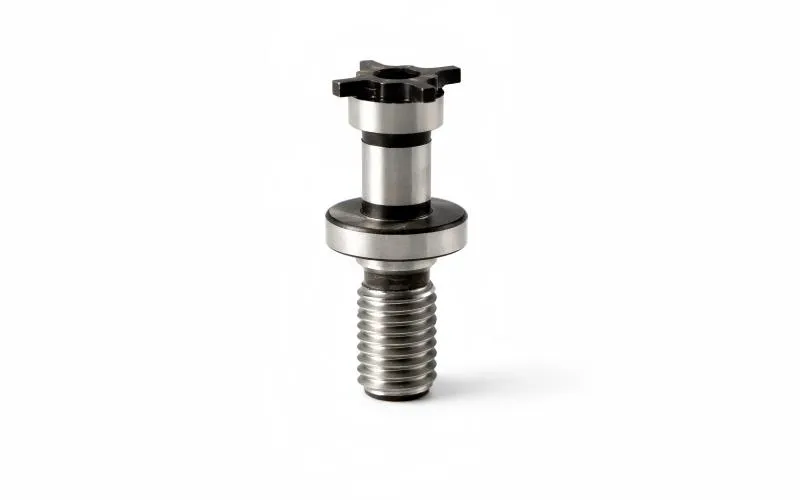
Heat treatment
Heat Treatment for CNC Metal Parts
Why Heat Treatment Matters
Heat treatment is a controlled process of heating, holding, and cooling metal parts to improve their internal structure and mechanical performance without significantly changing the external shape.
For CNC machined parts, heat treatment is often used to improve strength, hardness, dimensional stability, and fatigue life, especially in projects where reliability and long-term performance matter.
Main Benefits of Heat Treatment
Higher strength
For example, 7075 aluminum can increase from below 200 MPa to more than 570 MPa after T6 heat treatment, making it suitable for high-load applications.Higher hardness
6061-T6 can typically reach HB 75–95, while 7075-T6 can reach HB 150–180, offering much better wear resistance than the untreated condition.Stress relief
Annealing can remove residual stress left from CNC machining or welding, helping reduce deformation during later use.Better ductility when needed
Some heat treatment routes can improve formability, making the material better suited for bending, stamping, or other secondary operations.Longer fatigue life
Proper heat treatment helps parts perform better under repeated loading, which is important in aerospace, automotive, and other demanding industries.Wide material compatibility
Heat treatment is commonly used for aluminum alloys, titanium alloys, stainless steel, and many other engineering metals.
How to Choose the Right Heat Treatment Type
Different heat treatment methods are suitable for different project goals.
| If You Need… | Recommended Process | Typical Temper | Typical Applications |
|---|---|---|---|
| Stress relief and better dimensional stability | Annealing | O temper | Precision parts before machining, welded parts, stress relief |
| Maximum strength and hardness | Solution treatment + artificial aging | T6 | Aerospace structural parts, high-load components |
| Higher strength with better ductility | Solution treatment + natural aging | T4 | High-strength parts that still need bending or forming |
| Strength plus better stress corrosion resistance | Solution treatment + overaging | T73 | Marine parts, long-term load-bearing parts |
Simple rule:
If you want maximum strength, choose T6.
If you want better dimensional stability, choose annealing.
If you need forming after treatment, T4 may be more suitable.
If you need better corrosion resistance under stress, consider T73.
Process Capabilities
| Item | Description |
|---|---|
| Suitable Materials | Aluminum alloys such as 6061, 6063, 7075, 2024, 7050, as well as titanium alloys and stainless steel |
| Achievable Hardness | 6061-T6: HB 75–95; 7075-T6: HB 150–180; 2024-T6: HB 120–140 |
| Achievable Strength | 6061-T6: tensile strength 310–330 MPa; 7075-T6: tensile strength above 540 MPa |
| Dimensional Stability | Critical dimensions can typically be controlled within ±0.05 mm, depending on part structure |
| Standards | Can be processed according to AMS 2770, HB 5354, GB/T, or customer-defined specifications |
Heat Treatment Reference by Material
| Material | Recommended Temper | Tensile Strength (MPa) | Hardness (HB) | Typical Applications |
|---|---|---|---|---|
| 6061 | T6 | 310–330 | 75–95 | Mechanical parts, structural parts, jigs and fixtures |
| 6063 | T6 | >240 | 70–85 | Industrial frames, structural profiles |
| 7075 | T6 | ≥540 | 150–180 | Aerospace structural parts, high-load components |
| 7075 | T73 | 490–540 | 150–160 | Marine environments, parts requiring better stress corrosion resistance |
| 2024 | T6 | 440–490 | 120–140 | Aircraft skin parts, frame structures |
Will Heat Treatment Affect Dimensions?
Yes, it can. Heat treatment may cause a certain amount of deformation, so dimensional evaluation should be done in advance, especially for precision parts.
Common dimensional considerations
Typical straightness deviation is usually controlled within 0.1 mm/m
Roundness deviation can often be controlled within 0.03 mm
Critical fitting dimensions should generally be controlled within ±0.05 mm
For thin-wall parts, transfer time after quenching should often be kept within 5–15 seconds to reduce the risk of deformation
For precision parts used in industries such as aerospace and medical equipment, it is important to confirm key tolerances before heat treatment. In some cases, fixtures, stock allowance, or post-heat-treatment machining will be recommended.
Typical Applications of Heat-Treated Parts
| Industry | Typical Parts | Main Value |
|---|---|---|
| Aerospace | Structural brackets, connectors, fuselage frames | High strength and hardness for demanding load conditions |
| Consumer Electronics | Phone frames, laptop housings, precision structures | Improved stiffness and better thin-wall performance |
| Industrial Manufacturing | Mechanical parts, tooling fixtures, transmission components | Better wear resistance and longer fatigue life |
| Automotive | Chassis parts, suspension systems, body structural parts | Supports lightweight design while maintaining strength |
| Medical Devices | Surgical tools, equipment brackets, precision components | Stable mechanical performance and long-term reliability |
FAQ
Will parts deform after heat treatment?
A certain amount of deformation can happen, but in most cases it is controllable. Straightness deviation is often kept within 0.1 mm/m. Part structure, fixture design, and machining allowance all affect the final result.
How do I choose between 6061 and 7075?
It depends on your application.
6061-T6 is more cost-effective and widely used for general structural parts.
7075-T6 offers much higher strength and is more suitable for aerospace or high-load applications.
Will heat treatment affect surface appearance?
It may cause slight surface oxidation or color change, especially on aluminum parts. If appearance is important, sandblasting or another surface finishing process can be added afterward.
Can CNC machining still be done after heat treatment?
Yes. In many projects, rough machining is done before heat treatment, and finish machining is done after heat treatment. This is a common way to balance material performance and final dimensional accuracy.
Conclusion
Heat treatment is a key process for improving the performance of CNC metal parts. Whether your project needs better strength, higher hardness, improved stability, or longer service life, choosing the right heat treatment route can make a major difference.
If the material grade, target properties, and tolerance requirements are confirmed early in the project, it becomes much easier to achieve reliable and consistent results.