3-Axis vs 5-Axis CNC Machining: What Are the Key Differences?
Choose the Right CNC Machining Method—Don’t Let Equipment Limit Your Design
Hi, I’m Jake. I’ve been working with CNC machines of all kinds for nearly 20 years.
One question I hear all the time is:
“Should I use 3-axis or 5-axis machining for this part? How big is the price difference?”
Today, let’s talk about these two “numbered brothers” in the most straightforward way possible—and help you choose the right one.
1. A Real Example from Last Month
A designer recently created a bracket with several angled holes.
He first contacted a factory that only had 3-axis machines. Their response was:“We can do it, but we need custom fixtures for the angled surfaces.The machining cost will increase by about 30%.”
When the drawing came to us, we evaluated it on a 5-axis machine:
No special fixtures required
One setup completed all faces and holes
Machining time was 20% shorter
Final accuracy was higher
The customer later said:“If I had known 5-axis machining was this flexible, I wouldn’t have designed the part so conservatively.”
2. 3-Axis Machining: The Reliable Workhorse
3-axis machining is straightforward and stable:
The tool moves in X, Y, and Z directions
Machining is done mainly on flat and vertical surfaces
Strengths:
Simple and reliable
Lower machine cost
Lower hourly rate
Best suited for:
Flat parts: plates, panels, base plates
Simple geometries made of straight lines and arcs
Standard parts produced in batches
In one sentence:
If your part looks like a “block” that can be cut and drilled from straight directions, 3-axis machining is usually sufficient and the most economical choice.
3. 5-Axis Machining: The Flexible Gymnast
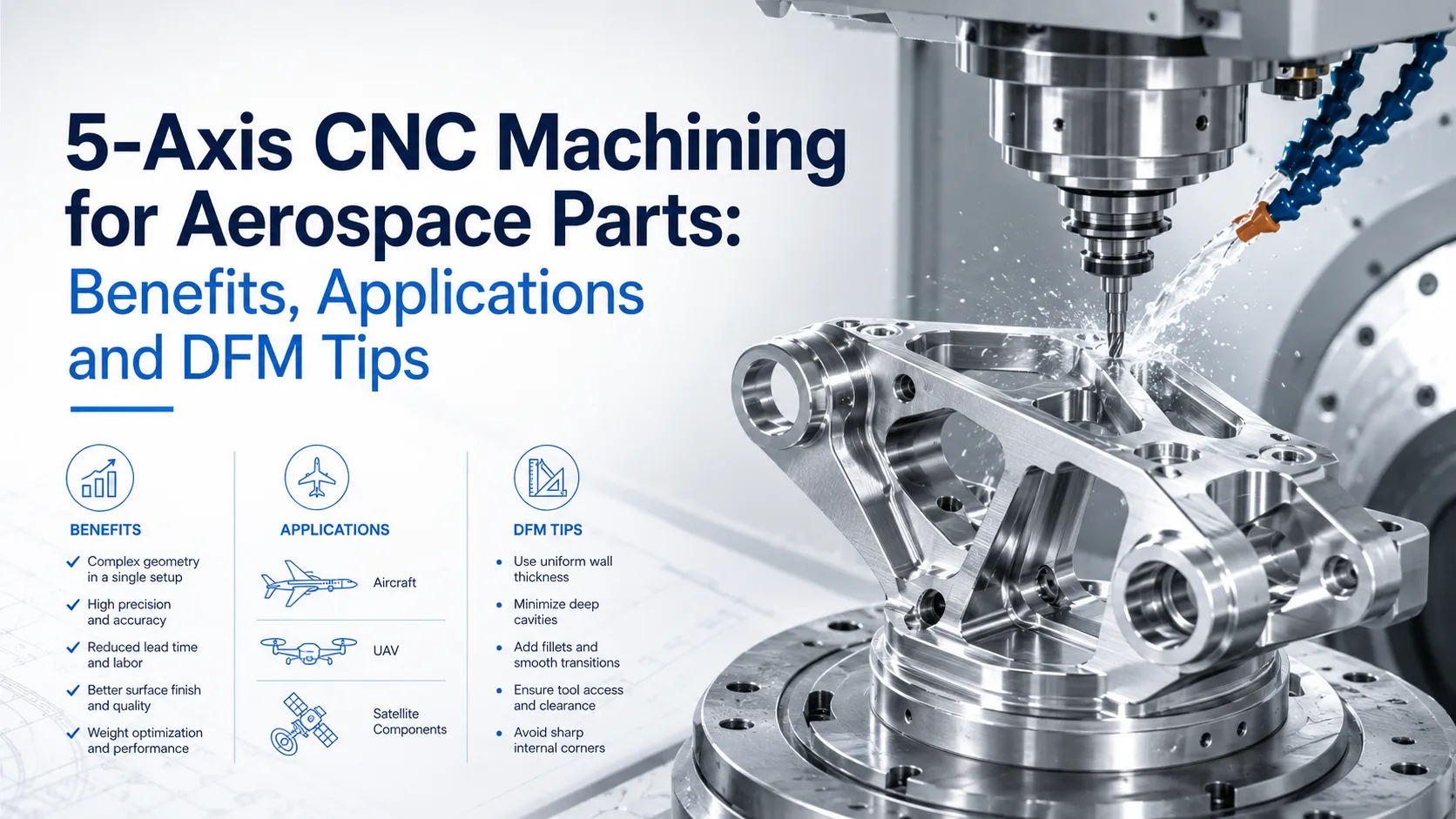
5-axis machining adds two rotational axes:
In addition to X, Y, and Z
The table or spindle can rotate and tilt
This allows the tool to approach the part from almost any angle.
Key capabilities:
One setup to machine five sides
Ideal for complex surfaces: impellers, helical grooves, ergonomic shapes
Better tool access to deep cavities and undercuts
Most importantly:
5-axis machining frees your design—you don’t always have to worry about whether a feature is “easy to machine.”
4. The Core Difference: Not “Better or Worse,” but “More Suitable”
| Comparison Item | 3-Axis Machining | 5-Axis Machining |
|---|---|---|
| Machining range | Flat & vertical surfaces | Any angle & complex surfaces |
| Number of setups | Multiple for complex parts | Usually one setup |
| Accuracy | Error accumulates with re-clamping | Single datum, higher accuracy |
| Programming | Relatively simple | More complex, requires experience |
| Machining cost | Lower hourly rate | Higher hourly rate |
| Best for | ~80% standard parts | Complex, high-precision parts |
5. Three Common Misunderstandings
Misunderstanding 1: “5-Axis Is Always More Expensive”
Not necessarily.
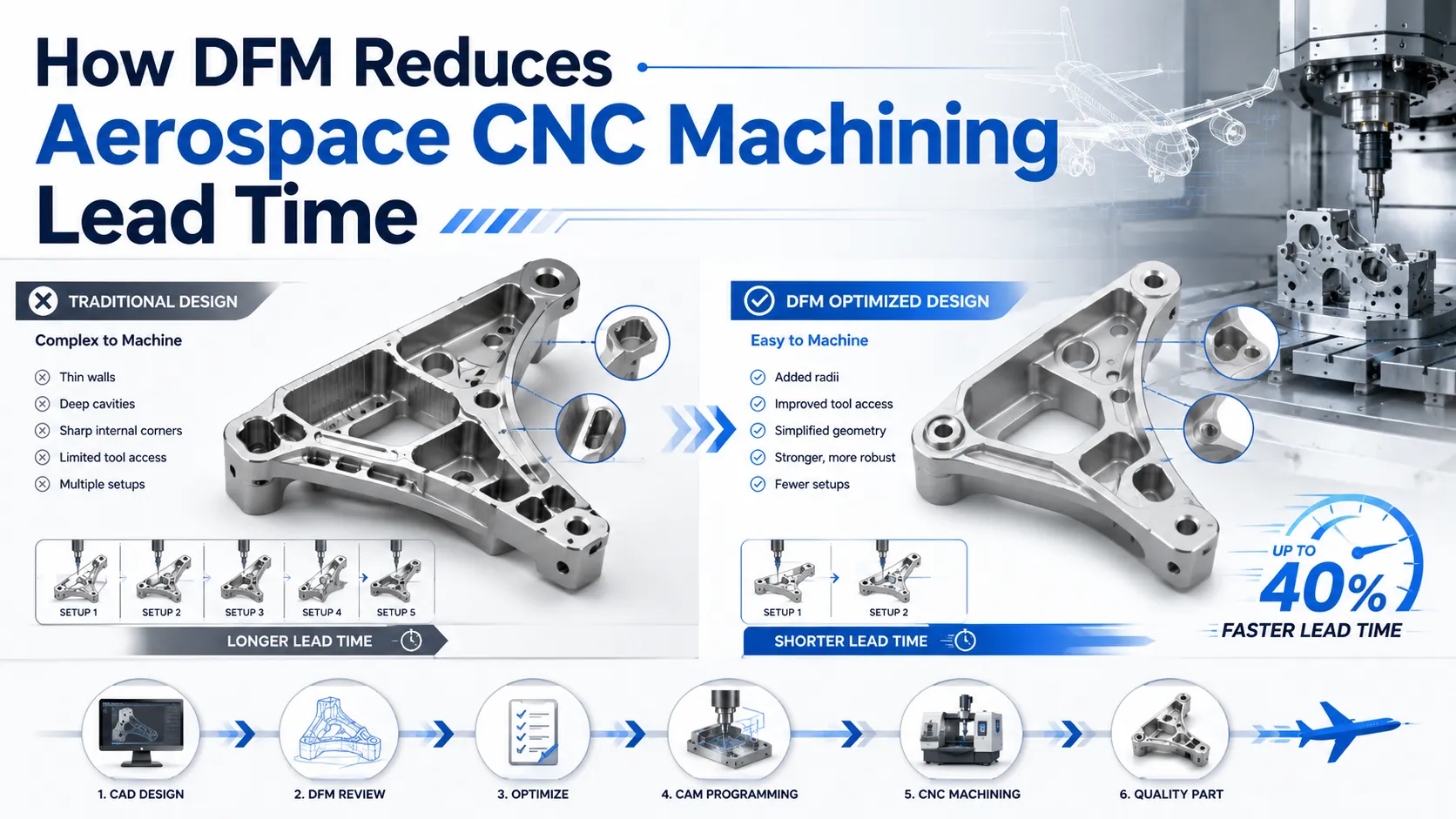
For complex parts, 5-axis machining can actually be cheaper overall by eliminating:
Multiple setups
Fixture costs
Rework and scrap
Misunderstanding 2: “My Part Is Simple, I Don’t Need 5-Axis”
Sometimes parts are “simple” only because the design was limited by machining capability.
With 5-axis machining in mind, designs can often be:
Lighter
Stronger
More compact or visually refined
Misunderstanding 3: “5-Axis Is Less Accurate Than 3-Axis”
In reality, high-quality 5-axis machines are extremely accurate.
Because they reduce re-clamping, finished part accuracy is often better.
6. How to Choose: Our Practical Recommendations
Choose 3-axis machining if:
Budget is limited and cost sensitivity is high
The part consists mainly of flat and vertical features
The design is finalized and does not require optimization
Consider 5-axis machining if:
The part includes angled, curved, or irregular features
High positional accuracy is required
Design optimization is restricted by machining limitations
Small-batch, high-mix production is needed
7. Why We Use Both 3-Axis and 5-Axis Machines
In our shop, we operate over 20 3-axis machines and 6 5-axis machines.
Why?
Simple parts should not be over-processed—3-axis saves cost
Complex parts require the right tool—5-axis delivers quality
The real value is matching the process to the requirement
8. Honest Advice for Buyers
When requesting a quote, don’t just say “I need machining.”
Share the application, tolerance requirements, and budget range.Let the factory participate early in design—many cost-saving optimizations happen here.
Don’t compare unit price alone—calculate total cost, including fixtures, rework risk, and time.
Final Thoughts
After many years in machining, I’ve learned one thing:
Machines are tools. Thinking is what really matters.
A good factory is not a machine showroom—it’s a solution provider.
If you have parts to machine, feel free to send us the drawings.
Our first step is not quoting, but process analysis:
3-axis or 5-axis?
What’s the most reasonable approach?
Sometimes, choosing the right method is more important than working harder.
Choose the right machining strategy—and you’re already halfway to success.