

Previous
Next
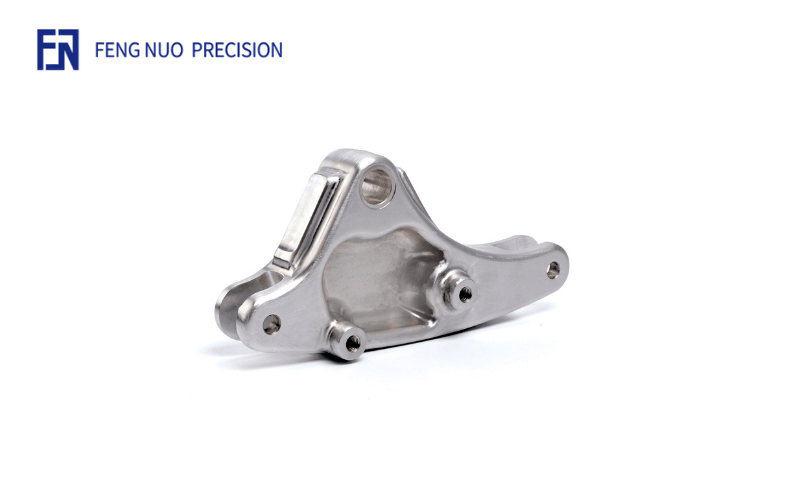
CNC Machined Aluminum Robot Components for Advanced Robotics Systems
The robotics industry is evolving rapidly, driven by automation, artificial intelligence, and high-precision motion control technologies. From industrial robotic arms to collaborative robots (cobots), autonomous mobile robots (AMRs), and humanoid systems, mechanical components must deliver high structural accuracy, lightweight performance, and consistent reliability.
Our CNC machined aluminum robot components are designed to support the structural, mechanical, and motion control requirements of modern robotic systems. Engineered for precision assembly and dynamic performance, these aluminum parts play a critical role in ensuring smooth operation, load stability, and long service life in demanding robotic applications.
Precision Machining for Robotic Motion Systems
Robotic systems rely heavily on accurate mechanical alignment. Even small deviations in structural parts can lead to vibration, positioning errors, or premature wear. CNC machining allows us to produce robot components with tight dimensional tolerances and consistent repeatability across production batches.
Key machining capabilities include:
High-precision milling for structural frames
Multi-surface machining for joint housings
Complex cavity machining for integrated components
Accurate hole positioning for bearing and motor mounting
Controlled surface finishing for sliding interfaces
Robotic assemblies often require alignment between servo motors, harmonic reducers, and linear guides. Maintaining geometric accuracy between these critical interfaces is essential for smooth motion and repeatable positioning accuracy.
Aluminum as a Preferred Material in Robotics
Aluminum alloys are widely used in robotic structures because they offer an optimal balance of strength, weight reduction, and machinability. Lightweight components reduce inertia, enabling faster acceleration and improved energy efficiency in robotic systems.
Common aluminum grades used for robotic components include:
6061-T6 for general structural frames
6082 for load-bearing supports
7075 for high-strength joint components
Precision aluminum tooling plates for mounting platforms
The reduced mass of aluminum parts directly enhances robotic dynamic performance, especially in articulated arms and high-speed pick-and-place systems.
Manufacturing Standards in the Robotics Industry
Although robotics manufacturing may not always follow aerospace-level certification, precision and consistency are equally critical. Our machining processes align with established quality control systems such as:
ISO 9001 quality management standards
Process documentation and inspection traceability
First Article Inspection (FAI) procedures
Statistical process monitoring
Dimensional inspections are conducted using coordinate measuring machines (CMM), digital calipers, and precision gauges. Key features such as perpendicularity, parallelism, and concentricity are carefully controlled.
For robotic components, assembly fit and repeatability are often more important than standalone dimensional values. Therefore, we focus on ensuring compatibility within integrated mechanical systems.
Typical CNC Aluminum Robot Parts We Manufacture
Our CNC machining capabilities support a broad range of robotic applications, including:
Robotic arm link structures
Joint housings and motor mounts
Gearbox and reducer enclosures
End-effector mounting plates
Sensor brackets and camera mounts
Linear guide supports
Mobile robot chassis frames
Automation cell structural brackets
Many robotic parts include lightweight pocketing, reinforcement ribs, and multi-angle mounting surfaces. Efficient material removal strategies help reduce weight without compromising rigidity.
Engineering Considerations for Robotic Aluminum Components
Robotic systems introduce specific design and machining challenges:
1. Dynamic Load Performance
Robotic arms experience continuous acceleration and deceleration cycles. Machining must preserve structural strength while minimizing mass.
2. Assembly Alignment
Bearing seats and reducer interfaces require high positional accuracy to prevent vibration and backlash.
3. Surface Interaction
Sliding components and mating surfaces require controlled surface roughness to reduce friction and wear.
4. Modular Design Compatibility
Many robotic systems use modular architectures. Components must be interchangeable and dimensionally consistent across production runs.
Surface Finishing and Post-Machining Options
Robotic aluminum components may undergo additional finishing processes, including:
Clear or black anodizing for corrosion resistance
Hard anodizing for wear-prone surfaces
Sandblasting for uniform texture
Laser engraving for identification
Precision deburring for assembly safety
Surface treatments not only enhance durability but also improve product aesthetics in commercial robotics applications.
Other CNC Components for the Robotics Industry
In addition to aluminum structural parts, robotic manufacturing commonly includes:
Stainless steel shafts and fasteners
Hardened steel transmission parts
Precision gears and coupling components
Custom fixtures for robotic assembly
Prototype components for robotic R&D
CNC machining supports both low-volume prototyping and medium-to-high volume production, allowing flexibility in robotics product development cycles.
Commitment to Precision Robotics Manufacturing
Robotics applications demand consistent motion accuracy, structural reliability, and long operational life. Our CNC machining processes are designed to deliver precise aluminum components that integrate seamlessly into robotic systems.
From prototype development to serial production, we focus on dimensional control, stable material performance, and production repeatability. With advanced machining centers, experienced engineers, and structured quality control procedures, we provide aluminum robotic components that support innovation in industrial automation and intelligent manufacturing.
Whether for industrial robotics, collaborative systems, medical robots, or mobile automation platforms, our CNC machining solutions deliver dependable performance tailored to the robotics industry.