

Previous
Next
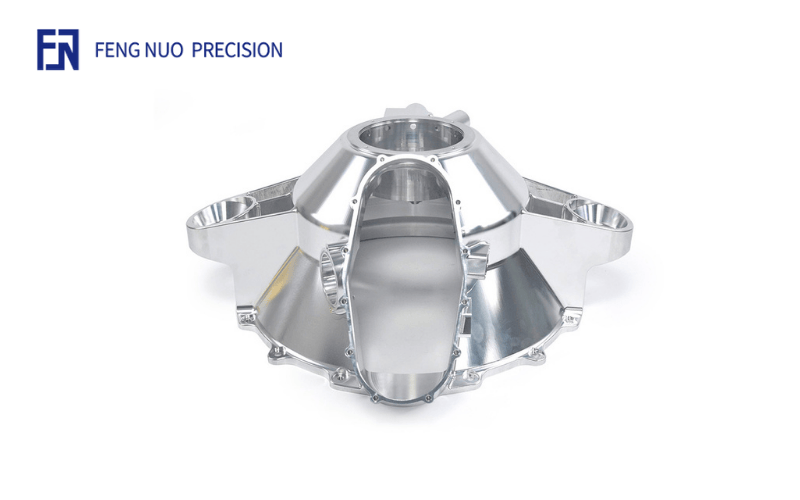
5-Axis CNC Aluminum Structural Components for Space & Aerospace Equipment
Space and aerospace systems demand an exceptional level of engineering discipline. Structural components used in satellites, onboard instruments, propulsion subsystems, and aerospace ground equipment must combine lightweight design, mechanical strength, and extreme dimensional accuracy.
Our 5-axis CNC machined aluminum structural components for aerospace and space equipment are developed to meet the rigorous performance expectations of high-altitude and orbital environments. These parts are manufactured with precision-driven processes that ensure geometric accuracy, structural stability, and long-term reliability.
In aerospace engineering, structural integrity is directly linked to mission success. Aluminum structural components serve as the backbone of many assemblies—supporting avionics systems, optical payloads, control units, and mechanical subsystems.
Engineering Advantages of 5-Axis CNC Machining in Aerospace Applications
Space-grade structural parts frequently involve complex three-dimensional geometries, multi-plane interfaces, and weight-reduction pockets. 5-axis CNC machining allows simultaneous movement across multiple axes, enabling advanced contouring and precise multi-surface finishing.
Key advantages include:
Enhanced geometric accuracy across complex surfaces
Improved perpendicularity and parallelism between interfaces
Efficient machining of deep cavities and complex rib structures
Reduced fixture repositioning and improved repeatability
Optimized tool access for intricate aerospace geometries
In aerospace assemblies, alignment between mounting surfaces, optical systems, or mechanical interfaces must be extremely accurate. Single-setup machining significantly improves consistency between critical dimensions.
Aluminum Alloys in Space Equipment Manufacturing
Aluminum remains one of the most widely used materials in aerospace structures due to its high strength-to-weight ratio and excellent machinability. Typical alloys used in space equipment structural components include:
7075 aluminum for high-load structural assemblies
7050 aluminum for improved fracture toughness
6061 aluminum for housings and support frames
2024 aluminum for fatigue-sensitive components
Each alloy presents unique machining characteristics. Advanced cutting strategies are applied to control heat input, minimize deformation, and ensure stable wall thickness in lightweight structures.
Material certification and batch traceability are maintained to meet aerospace documentation requirements.
Aerospace Manufacturing Protocols and Quality Assurance
Manufacturing structural components for aerospace equipment requires adherence to strict process control and documentation practices. Our machining procedures are structured to align with recognized aerospace quality systems such as:
AS9100 quality management principles
Controlled production workflows
First Article Inspection validation
Detailed dimensional inspection reports
Lot traceability and material certification
Inspection methods include coordinate measuring machines (CMM), digital height gauges, surface roughness testers, and geometric tolerance verification.
Critical features such as bolt-hole positioning, interface flatness, and bearing alignment are carefully monitored to ensure compatibility within complex aerospace assemblies.
Typical Aerospace Structural Parts We Manufacture
Our 5-axis machining capability supports the production of a wide range of aerospace equipment structures, including:
Satellite support brackets
Instrumentation mounting plates
Structural interface frames
Optical payload housings
Flight control system supports
Precision alignment platforms
Lightweight aerospace chassis
Avionics structural enclosures
Many aerospace structural designs incorporate internal ribbing, honeycomb-inspired cavities, and optimized wall thicknesses to reduce mass while maintaining rigidity.
High-speed machining strategies combined with rigid fixturing help preserve structural accuracy even in thin-wall sections.
Design and Machining Considerations for Space Environments
Space applications introduce unique engineering challenges that influence machining strategy:
1. Mass Efficiency
Weight reduction is a constant priority. Machining programs are optimized to remove excess material while maintaining load-bearing capability.
2. Dimensional Stability Under Thermal Variation
Space equipment can experience extreme temperature fluctuations. Stress-relief machining techniques and balanced material removal help improve stability.
3. Surface Integrity and Fatigue Resistance
Micro-surface defects can impact fatigue life. Careful finishing processes and edge blending improve long-term durability.
4. Assembly Accuracy
Structural components must integrate seamlessly with adjacent assemblies. Hole patterns, alignment surfaces, and mating interfaces are verified with strict tolerance control.
Surface Treatments and Finishing for Aerospace Structures
Aluminum aerospace structural components often undergo specialized finishing processes, including:
Hard anodizing for abrasion and corrosion resistance
Conductive coatings for electrical grounding
Precision edge deburring and radius control
Laser marking for identification
Surface sealing treatments
The choice of surface treatment depends on environmental exposure, conductivity requirements, and mission duration.
Additional Aerospace CNC Capabilities
In addition to aluminum structural components, aerospace CNC machining often includes:
Titanium load-bearing brackets
Stainless steel precision hardware
Composite material interface components
Lightweight equipment panels
Prototype development for aerospace R&D
5-axis machining is especially beneficial for prototype production, enabling rapid validation of complex aerospace designs.
Commitment to Precision Space Manufacturing
Aerospace and space equipment manufacturing demands absolute process reliability and engineering discipline. Every stage—from raw material selection to final inspection—is performed under structured quality control.
With advanced 5-axis machining technology, experienced technical teams, and strict aerospace-oriented production management, we deliver aluminum structural components designed for high-performance aerospace environments.
Whether supporting satellite systems, aircraft subsystems, UAV platforms, or aerospace ground equipment, our machining solutions provide dependable structural precision aligned with industry expectations.