
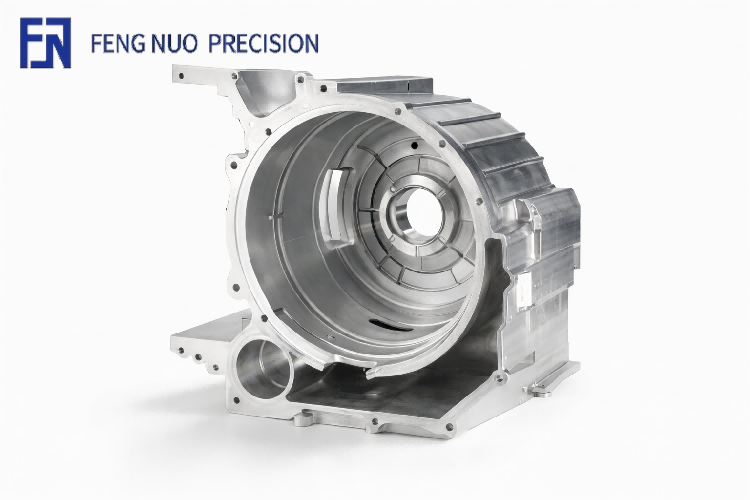
5-Axis CNC Machined Aluminum Automotive Components for High-Performance Vehicles
As the automotive industry advances toward electrification, lightweight structures, and intelligent vehicle systems, aluminum precision components are becoming increasingly essential. From structural reinforcements and drivetrain assemblies to EV battery platforms and chassis modules, modern vehicles rely on complex aluminum parts that demand high dimensional accuracy and consistent production quality.
Our 5-axis CNC machined aluminum automotive components are manufactured to meet the stringent mechanical, thermal, and structural requirements of contemporary automotive engineering. Designed for durability, lightweight efficiency, and geometric precision, these parts support both traditional internal combustion vehicles and next-generation electric mobility platforms.
In automotive systems, machining precision directly affects assembly alignment, vibration control, and long-term reliability. Multi-axis machining technology ensures stable and repeatable production across complex component geometries.
5-Axis CNC Machining for Complex Automotive Designs
Automotive aluminum parts often include:
Multi-directional mounting faces
Lightweight pocketed structures
Deep cavities and reinforcement ribs
Precision bearing and shaft bores
Complex curved contours
Integrated cooling passages
5-axis CNC machining enables simultaneous multi-surface cutting, reducing setup changes and minimizing tolerance accumulation. This ensures higher positional accuracy between critical features such as bolt holes, alignment surfaces, and rotating interfaces.
The ability to machine complex forms in a single setup is particularly beneficial for automotive parts that require strict concentricity and geometric consistency.
Aluminum Materials in Automotive Engineering
Aluminum alloys are widely used in automotive applications because they combine structural strength with significant weight reduction.
Key benefits include:
Improved fuel efficiency or extended EV range
High strength-to-weight ratio
Corrosion resistance in diverse environments
Excellent machinability for detailed features
Common grades such as 6061-T6, 6082, and other automotive-grade aluminum alloys are selected based on load requirements and performance conditions.
Lightweight aluminum components contribute to improved vehicle dynamics, reduced emissions, and enhanced thermal management.
Compliance with Automotive Industry Standards
Automotive components must comply with strict quality management frameworks to ensure safety and reliability.
Our production processes align with recognized automotive standards, including:
IATF 16949 automotive quality management
PPAP (Production Part Approval Process) documentation
First Article Inspection (FAI)
Statistical Process Control (SPC)
Complete material and batch traceability
Dimensional inspection is performed using coordinate measuring machines (CMM), precision bore gauges, and advanced metrology systems. Critical tolerances such as flatness, perpendicularity, and concentricity are verified to ensure proper assembly integration.
Consistency across large production volumes is essential for automotive supply chains.
Typical Aluminum Automotive Parts We Manufacture
Our 5-axis CNC machining capabilities support a wide range of automotive applications, including:
Chassis mounting brackets
Engine structural supports
EV motor mounting components
Battery module structural plates
Suspension interface parts
Steering system supports
Cooling system structural elements
Lightweight reinforcement components
Many of these parts require optimized material removal to achieve weight reduction while preserving structural strength.
Engineering Considerations in Automotive Aluminum Machining
Manufacturing aluminum automotive components requires careful attention to several technical factors:
1. Dimensional Accuracy
Precise alignment ensures stable assembly and reduces vibration during operation.
2. Weight Optimization
Material removal strategies focus on reducing unnecessary mass while maintaining rigidity.
3. Thermal Stability
Components exposed to engine heat or electric motor temperatures must maintain structural integrity.
4. Surface Quality
Controlled surface finishes improve sealing performance and assembly fit.
Optimized machining strategies and stable fixturing methods help minimize deformation and ensure consistent geometric relationships.
Surface Treatment and Post-Machining Processes
Depending on vehicle system requirements, aluminum automotive components may undergo additional finishing processes such as:
Anodizing for corrosion resistance
Chemical conversion coating
Precision deburring and edge finishing
Thread tapping and insert installation
Laser marking for traceability
Surface treatments enhance durability and protect components from environmental exposure.
Expanded CNC Capabilities for Automotive Applications
In addition to aluminum components, our CNC machining services support:
Stainless steel drivetrain parts
Hardened steel mounting hardware
EV cooling system components
Transmission housings
Turbocharger structural supports
Performance vehicle prototypes
5-axis CNC machining is particularly advantageous for parts with complex multi-angle geometries and tight tolerance requirements.
Commitment to Automotive Precision and Reliability
Modern vehicles demand components that combine lightweight design with mechanical stability and consistent quality. Our 5-axis CNC machining technology, supported by structured quality control systems and advanced inspection methods, enables us to deliver aluminum automotive components that meet industry performance standards.
From early-stage prototyping to full-scale production support, we emphasize repeatable accuracy, structural integrity, and long-term durability.
Whether supporting OEM vehicle manufacturers, EV developers, or high-performance automotive brands, our precision-machined aluminum parts contribute to efficient, reliable, and future-ready automotive engineering.