Robotic systems rely on highly precise joint mechanisms to achieve accurate motion control, smooth articulation, and long-term mechanical stability. Whether in industrial robotic arms, collaborative robots (cobots), humanoid platforms, or precision medical robots, joint structural components form the mechanical core of movement.
Our 5-axis CNC machined aluminum robotic joint structural components are engineered to support high-load rotational systems, ensure accurate alignment of drive elements, and maintain structural rigidity under continuous motion cycles. Designed for modern robotic platforms, these aluminum components combine lightweight construction with exceptional dimensional accuracy.
In robotic joints, even small geometric deviations can lead to backlash, vibration, or positioning errors. Therefore, structural precision is fundamental to robotic performance.
Precision Engineering for Robotic Joint Assemblies
Robotic joint modules typically integrate:
Harmonic drive or planetary reducer interfaces
Bearing seats
Servo motor mounting platforms
Cable routing passages
Reinforced structural ribs
Multi-axis alignment surfaces
These features must be manufactured with strict tolerance control to maintain concentricity and alignment between rotating components.
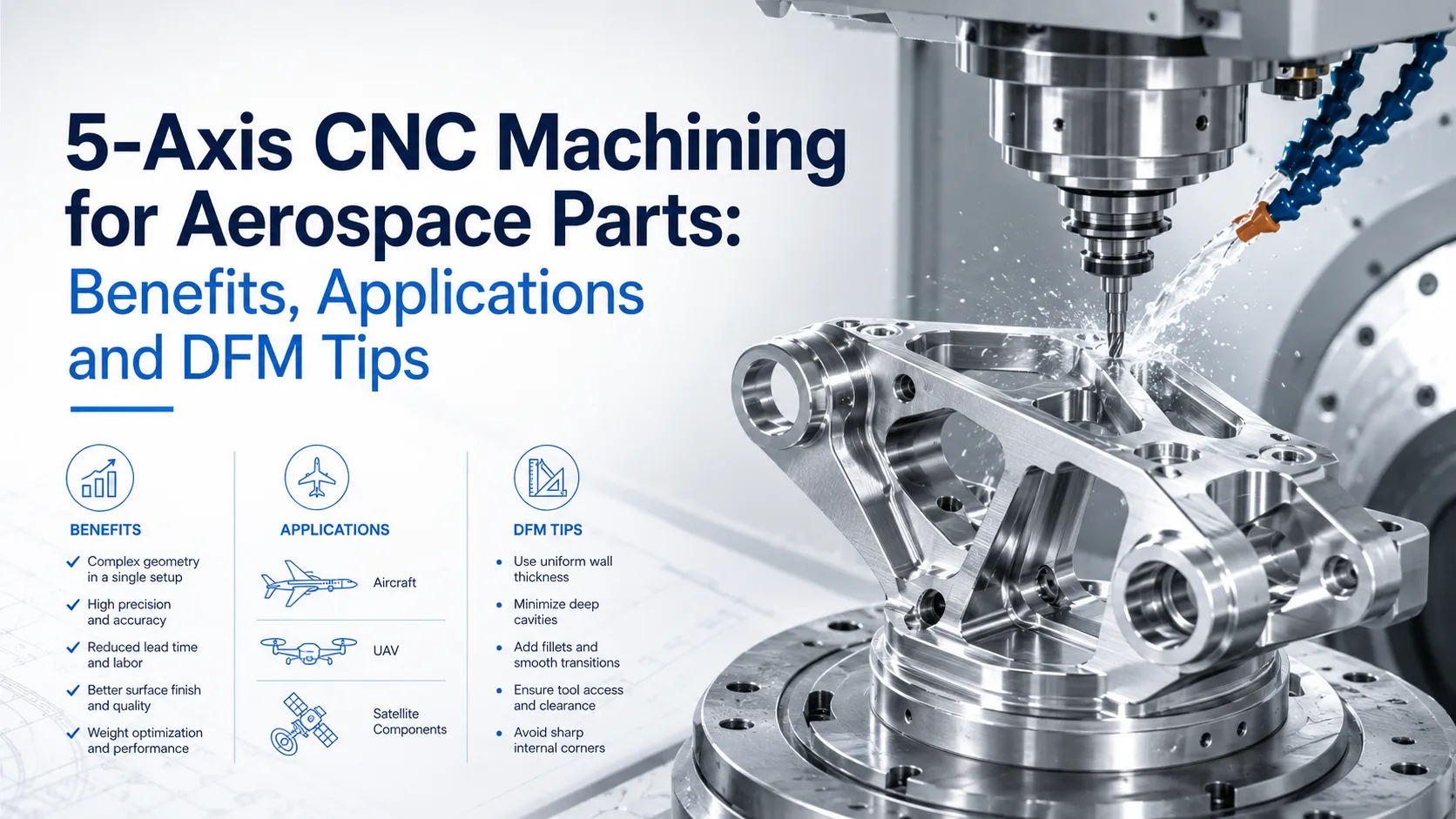
5-axis CNC machining allows simultaneous multi-angle cutting, ensuring precise relationships between bearing bores, mounting faces, and structural supports. By minimizing repositioning during machining, geometric consistency is significantly improved.
For robotic joints operating at high speed or under dynamic load, accurate bore alignment is critical to reducing mechanical stress and extending component lifespan.
Aluminum Alloys for Robotic Joint Structures
Aluminum alloys are widely used in robotic joint assemblies due to their favorable combination of strength, weight reduction, and machinability.
Commonly selected grades include:
6061-T6 for general joint housings
7075 for high-strength, load-bearing structures
6082 for balanced structural performance
Lightweight aluminum construction reduces rotational inertia, improving servo response time and energy efficiency. This is particularly important in articulated robotic arms and high-speed automation systems.
Proper material selection supports structural stiffness while minimizing unnecessary mass.
Manufacturing Standards in Robotics Production
The robotics industry demands high repeatability and reliable batch consistency. Although regulatory standards vary by application, precision and documented quality control remain essential.
Our machining processes align with structured quality management systems including:
ISO 9001 quality standards
First Article Inspection (FAI) procedures
In-process dimensional verification
Geometric tolerance inspection
Batch traceability documentation
Dimensional verification is performed using coordinate measuring machines (CMM), bore gauges, and precision metrology equipment. Key parameters such as concentricity, perpendicularity, and positional tolerance are strictly monitored.
Consistency across production runs ensures compatibility in modular robotic assemblies.
Engineering Considerations for Robotic Joint Components
Manufacturing aluminum joint structural components involves careful control of several technical aspects:
1. Concentricity and Bore Precision
Accurate alignment between bearings and drive interfaces ensures smooth rotation and minimizes backlash.
2. Structural Reinforcement
Joint components must withstand torque loads while maintaining dimensional integrity.
3. Weight Optimization
Material removal strategies are applied to reduce mass without compromising mechanical strength.
4. Vibration Control
High-speed robotic motion requires balanced structural design to prevent resonance and noise.
5-axis machining allows optimized internal pocketing and rib design while maintaining uniform wall thickness.
Surface Finishing and Post-Processing
Robotic joint components may undergo additional finishing treatments to enhance durability and performance:
Clear or black anodizing for corrosion resistance
Hard anodizing for wear-prone surfaces
Precision deburring and edge rounding
Laser marking for part identification
Surface polishing for improved assembly fit
Anodized finishes protect aluminum components from oxidation and improve long-term durability in industrial environments.
Additional CNC Components for Robotics Industry
Beyond joint structures, our CNC machining capabilities support the production of:
Robotic arm link segments
Motor housing assemblies
End-effector mounting plates
Base platform frames
Gearbox support structures
Lightweight structural chassis components
5-axis CNC machining is particularly beneficial for complex robotic components requiring multi-surface accuracy and consistent geometric relationships.
Commitment to Precision Robotic Manufacturing
Robotic systems depend on stable mechanical structures to achieve accurate motion and reliable performance. Our 5-axis CNC machining technology enables the production of aluminum robotic joint structural components that meet the high standards of modern robotics engineering.
From prototype development to scalable production, we emphasize dimensional accuracy, structural stability, and consistent material performance.
Whether supporting industrial automation, collaborative robotics, research platforms, or advanced robotic systems, our precision-machined aluminum joint components contribute to smooth, efficient, and reliable robotic motion.