
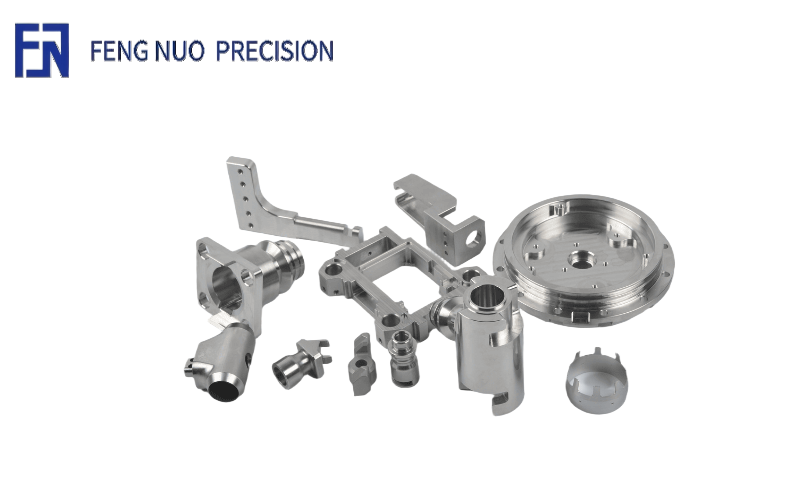
Turn-Mill CNC Machined Stainless Steel Automotive Parts
Turn-Mill CNC Machined Stainless Steel Automotive Parts
In the automotive industry, precision, durability, and consistency are non-negotiable. Components must withstand vibration, heat, corrosion, pressure, and continuous mechanical stress over long service cycles. Our turn-mill combined CNC machined stainless steel automotive parts are engineered to meet the demanding requirements of modern vehicle systems, from powertrain assemblies to exhaust and structural components.
What Is Turn-Mill Machining?
Turn-mill machining, also known as mill-turn machining, integrates CNC turning and CNC milling operations into a single machine setup. This technology enables the machining of complex parts that require both rotational symmetry and multi-axis milling features—without transferring the part between separate machines.
For automotive stainless steel components, this offers several key advantages:
Single setup processing for improved concentricity
Reduced tolerance stack-up
Higher dimensional accuracy
Faster production cycles
Improved surface consistency
Reduced handling damage
By combining turning and milling operations in one process, we improve efficiency while maintaining tight tolerances essential for automotive assemblies.
Stainless Steel Materials for Automotive Applications
Stainless steel is widely used in automotive manufacturing due to its strength, corrosion resistance, and heat resistance. We commonly machine:
SUS304 – General corrosion-resistant automotive components
SUS316 – High corrosion resistance for harsh environments
SUS420 / 430 – Wear-resistant automotive parts
17-4PH – High-strength structural components
Automotive-grade stainless alloys for exhaust and turbo systems
Each material requires optimized cutting parameters. Stainless steel generates higher cutting temperatures and work-hardens quickly, so advanced tooling strategies and coolant control are critical to maintaining surface integrity and dimensional stability.
Automotive Industry Machining Standards
Automotive manufacturing follows strict quality control systems to ensure safety, reliability, and long production life. Our production aligns with automotive industry best practices, including:
IATF 16949 quality management principles
ISO 9001 process control
PPAP (Production Part Approval Process)
First Article Inspection (FAI)
Statistical Process Control (SPC)
Full batch traceability
Dimensional inspection is performed using CMM equipment, precision gauges, and automated measuring systems. We ensure that every batch meets drawing specifications and assembly requirements.
In automotive projects, consistency across high-volume production runs is critical. Even small deviations can affect assembly alignment, sealing performance, or vibration resistance. Our turn-mill technology ensures repeatability across large production quantities.
Typical Stainless Steel Automotive Components We Manufacture
Our turn-mill CNC machining capabilities support a wide range of automotive applications, including:
Sensor housings
Shaft components
Valve bodies
Turbocharger fittings
Exhaust connectors
Fuel system components
Steering system parts
Brake system fittings
Suspension hardware
Engine mounting components
Many automotive stainless steel parts require internal threading, cross-drilling, precision slots, keyways, and complex geometric features. Turn-mill machining allows these features to be produced efficiently in a single operation.
Key Machining Considerations in Automotive Stainless Steel Parts
Automotive stainless steel components present unique machining challenges:
1. Dimensional Precision
Automotive assemblies demand high concentricity and tight tolerances, often within ±0.01 mm or better. Turn-mill machining ensures stable positioning and alignment between rotational and milled features.
2. Surface Finish
Sealing surfaces, mating areas, and rotating interfaces require smooth finishes, often Ra 0.8–1.6 µm depending on function. Toolpath optimization and finishing strategies are carefully controlled.
3. Heat and Work Hardening Control
Stainless steel work-hardens rapidly. Improper cutting strategies can lead to tool wear and surface damage. We apply optimized cutting speeds, rigid tooling, and coolant management to prevent material hardening during machining.
4. High-Volume Production Stability
Automotive projects often involve long-term contracts with consistent volume. Tool life monitoring, process documentation, and statistical control ensure stable performance across production cycles.
Surface Treatments and Secondary Processes
Automotive stainless steel components may require additional processing to enhance performance:
Passivation for corrosion resistance
Electropolishing for improved surface quality
Heat treatment for strength improvement
Precision deburring and edge conditioning
Laser marking for traceability
Assembly integration services
Each secondary process is integrated into the overall quality control workflow.
Beyond Stainless Steel: Other Automotive CNC Products
In addition to stainless steel parts, automotive CNC machining commonly includes:
Aluminum engine components
Brass electrical fittings
Carbon steel structural parts
High-strength alloy shafts
Precision fasteners and connectors
Transmission components
Turn-mill machining is particularly suitable for complex automotive shafts, threaded fittings, and multifunctional mechanical components.
Our Commitment to Automotive Manufacturing Excellence
Automotive production is built on reliability, repeatability, and strict quality control. From raw material sourcing to final inspection, our turn-mill CNC machining process is optimized for automotive-grade performance.
With advanced multi-axis turn-mill equipment, experienced engineering support, and robust quality systems, we deliver stainless steel automotive components that meet modern vehicle safety and durability standards.
Whether you require prototype development, low-volume production, or high-volume automotive supply contracts, we provide precision machining solutions tailored to automotive industry requirements.