

Previous
Next
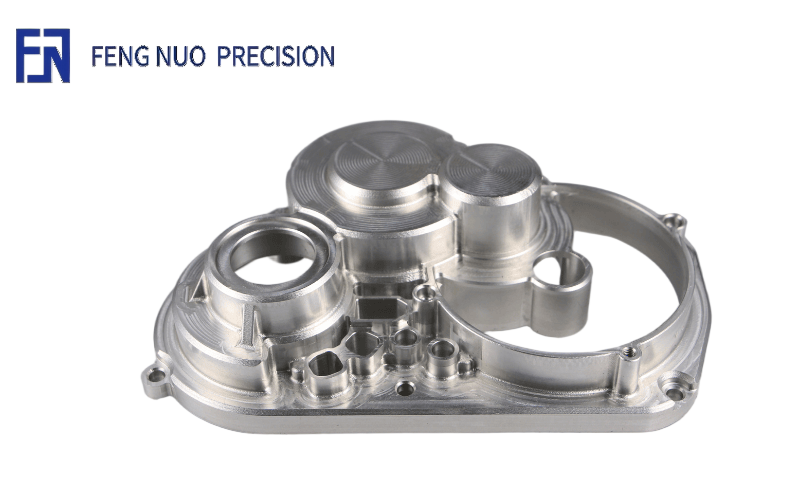
5-Axis CNC Machined Aluminum Powertrain Housing for Motorcycle Applications
In the motorcycle industry, performance, weight optimization, and mechanical reliability are key factors that define product quality. The powertrain housing—often referred to as the engine or transmission casing—serves as the structural foundation that protects internal gears, shafts, bearings, and lubrication systems. It must withstand vibration, heat, torque loads, and environmental exposure while maintaining precise alignment of rotating components.
Our 5-axis CNC machined aluminum powertrain housings for motorcycles are engineered to deliver structural rigidity, dimensional precision, and lightweight performance. Designed for both high-performance motorcycles and standard road models, these aluminum housings provide accurate mounting interfaces, stable sealing surfaces, and optimized internal geometry for reliable drivetrain operation.
Advanced 5-Axis Machining for Complex Powertrain Structures
Motorcycle powertrain housings typically feature intricate internal cavities, oil channels, mounting bosses, and bearing seats. They often require multi-angle machining, complex contouring, and tight geometric tolerances.
5-axis CNC machining provides significant advantages in producing these components:
Simultaneous multi-surface machining
Accurate bore alignment for shafts and bearings
Efficient internal cavity machining
Precise sealing surface finishing
Reduced setup errors and improved consistency
Single-setup machining improves concentricity between critical features such as transmission shafts and bearing seats. This ensures smoother gear operation and reduces long-term mechanical wear.
Aluminum as the Ideal Material for Motorcycle Powertrain Housings
Aluminum alloys are widely used in motorcycle engine and transmission casings due to their balance of strength, heat dissipation, and reduced weight.
Key material benefits include:
Lightweight construction for improved power-to-weight ratio
High thermal conductivity for efficient heat management
Good corrosion resistance
Excellent machinability for detailed features
Commonly used aluminum grades such as 6061-T6 and other automotive-grade alloys provide structural durability while supporting efficient cooling of internal components.
Weight reduction is especially important in high-performance motorcycles, where improved acceleration and handling depend on minimizing mass.
Manufacturing Standards in the Motorcycle Industry
Powertrain components must meet strict dimensional and mechanical performance requirements to ensure safe operation. Our machining processes follow structured quality control procedures consistent with industry expectations, including:
ISO 9001 quality management systems
First Article Inspection (FAI)
In-process dimensional verification
Batch traceability and documentation
Precision geometric tolerance control
Critical dimensions such as shaft bore concentricity, mounting surface flatness, and sealing groove geometry are verified using coordinate measuring machines (CMM) and precision inspection tools.
Consistent quality across production batches is essential for both OEM motorcycle manufacturers and aftermarket performance component suppliers.
Engineering Considerations in Powertrain Housing Machining
Producing aluminum powertrain housings requires careful attention to multiple technical factors:
1. Shaft Alignment Accuracy
Accurate bore positioning ensures smooth gear engagement and reduces vibration.
2. Sealing Integrity
Oil channels and gasket surfaces must maintain flatness and proper groove dimensions to prevent leakage.
3. Thermal Management
Engine and transmission systems generate significant heat. Aluminum housing design and machining must support efficient heat dissipation.
4. Structural Strength
Housing walls must maintain rigidity under torque load while minimizing unnecessary material weight.
5-axis machining allows optimized material removal, creating lightweight yet structurally reinforced designs.
Surface Finishing and Post-Processing
Depending on application requirements, aluminum motorcycle powertrain housings may undergo additional finishing processes, including:
Anodizing for corrosion resistance
Precision deburring and edge conditioning
Surface polishing for aesthetic appearance
Thread tapping and helicoil installation
Laser marking for part identification
Surface finishing improves durability and visual appeal, particularly in performance motorcycle markets.
Other CNC Components for Motorcycle Applications
Beyond powertrain housings, our CNC machining capabilities support a wide range of motorcycle components, including:
Engine covers
Clutch housings
Brake system brackets
Suspension linkage parts
Frame connectors
Cooling system components
High-performance intake manifolds
5-axis machining is particularly suitable for parts requiring complex internal passages and multi-angle mounting interfaces.
Commitment to Precision Motorcycle Manufacturing
Motorcycle powertrain systems demand reliability, smooth mechanical performance, and structural stability. Our 5-axis CNC machining technology enables the production of aluminum housings that meet modern motorcycle engineering requirements.
From prototype development to controlled batch production, we apply structured quality management and precision inspection processes to ensure consistent results.
Whether supporting OEM motorcycle manufacturers, performance tuning specialists, or custom motorcycle builders, our precision-machined aluminum powertrain housings are designed to deliver durability, efficiency, and high-performance reliability.