
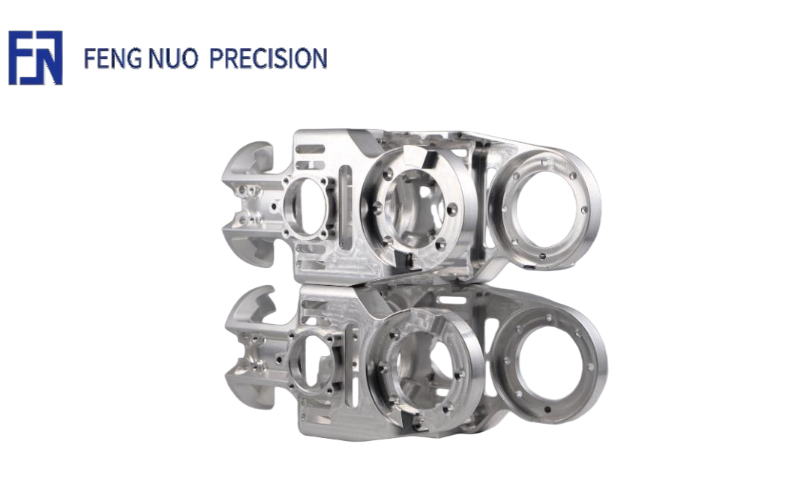
5-Axis CNC Machined Aluminum Structural Components for Robotics
The robotics industry demands precision engineering at every structural level. Whether in industrial robotic arms, collaborative robots (cobots), autonomous mobile robots (AMRs), or precision medical robotics, structural components must combine lightweight construction, dimensional stability, and mechanical strength.
Our 5-axis CNC machined aluminum robotic structural components are engineered to support high-performance motion systems, ensuring accurate positioning, stable load distribution, and long-term operational reliability. These components serve as the core framework of robotic assemblies, forming the foundation for joints, actuators, sensors, and transmission systems.
In robotics applications, structural precision directly affects movement accuracy, vibration control, and energy efficiency. Therefore, machining quality plays a decisive role in overall system performance.
Why 5-Axis CNC Machining for Robotic Structures?
Robotic structural components often involve complex geometries, multi-angle mounting surfaces, internal reinforcement cavities, and weight-reduction designs. Traditional machining methods may require multiple repositioning steps, increasing the risk of cumulative tolerance errors.
5-axis CNC machining provides:
Simultaneous multi-surface machining
Improved geometric accuracy across complex forms
Enhanced perpendicularity and parallelism control
Efficient internal pocket and rib machining
Reduced setup deviation
Superior surface consistency
For robotic arms and joint modules, alignment between bearing seats, motor mounts, and reducer interfaces must be precise. Single-setup multi-axis machining significantly improves positional consistency between these critical features.
Aluminum Alloys for Robotic Structural Applications
Aluminum is widely used in robotics due to its favorable balance of strength, weight reduction, and machinability. Commonly used alloys include:
6061-T6 for general structural frames
6082 for load-bearing robotic components
7075 for high-strength joint structures
Precision aluminum plate materials for mounting platforms
Lightweight aluminum construction reduces inertial load on servo motors and drive systems, improving acceleration response and energy efficiency. This is especially important in high-speed pick-and-place robots and articulated arms.
Robotics Manufacturing Standards and Quality Control
While robotics manufacturing standards vary by application, precision and repeatability are fundamental. Our machining processes follow structured quality management systems, including:
ISO 9001 quality standards
First Article Inspection (FAI)
In-process dimensional control
Statistical process monitoring
Documented inspection reporting
Dimensional verification is performed using coordinate measuring machines (CMM) and precision measuring tools. Key geometric parameters such as flatness, concentricity, and positional accuracy are strictly controlled.
For robotic assemblies, tolerance consistency across batches is critical to maintaining modular compatibility and repeatable system performance.
Typical 5-Axis CNC Aluminum Robotic Components
Our machining capabilities support a wide range of robotic structural parts, including:
Robotic arm link segments
Joint housing frames
Reducer mounting brackets
Base platform structures
End-effector support frames
Sensor mounting structures
Autonomous mobile robot chassis components
Structural reinforcement plates
Many of these parts incorporate internal ribs, hollow cavities, and optimized wall thickness to achieve lightweight yet rigid designs.
Engineering Considerations in Robotic Structural Machining
Producing aluminum structural parts for robotics requires careful control of multiple technical factors:
1. Structural Rigidity vs. Weight Optimization
Material removal must reduce weight while maintaining sufficient strength to handle dynamic loads.
2. Dynamic Motion Stability
High-speed robotic movement requires balanced structural design to minimize vibration.
3. Precision Interface Alignment
Mounting surfaces for bearings, harmonic drives, and servo motors must maintain high positional accuracy.
4. Surface Quality
Controlled surface finish improves assembly fit and reduces wear in contact interfaces.
Optimized tool paths and clamping strategies help prevent deformation during machining, especially in thin-wall structures.
Surface Treatments and Finishing Options
Robotic aluminum structural components may undergo additional finishing processes to enhance durability and appearance:
Clear or black anodizing for corrosion resistance
Hard anodizing for wear-prone areas
Sandblasting for uniform texture
Precision deburring and edge rounding
Laser marking for traceability
Surface treatments improve long-term performance in industrial automation environments.
Additional CNC Capabilities for Robotics Industry
In addition to aluminum structural components, robotics CNC machining commonly includes:
Stainless steel shafts and connectors
Hardened steel transmission parts
Precision gears and couplings
Custom mounting fixtures
Prototyping for robotic R&D
Lightweight aerospace-grade components for advanced robotic systems
5-axis machining technology supports both prototype validation and scalable production runs.
Commitment to Precision Robotics Manufacturing
Robotics applications require high repeatability, durability, and structural precision. Our 5-axis CNC machining capabilities, combined with structured quality control systems and engineering expertise, enable us to deliver aluminum robotic structural components that meet demanding industry expectations.
From lightweight arm segments to precision joint housings, our components are manufactured to integrate seamlessly into advanced robotic systems.
Whether for industrial automation, collaborative robotics, or mobile robotic platforms, our precision aluminum machining solutions support innovation and performance in modern robotics engineering.