An Honest Guide from a Factory Manager with 20 Years of Experience
Hi, I’m Jake. I’ve been working in the CNC machining industry for nearly 20 years.
Today, I don’t want to talk in marketing language. I just want to share some real experiences with buyers—mistakes I’ve seen again and again, and money that honestly didn’t need to be spent.
If you’re preparing to place a CNC machining order, take a few minutes to read this. It might save you a surprising amount of cost and trouble.
1. “I Sent the Drawing, That’s Enough” — Not Always
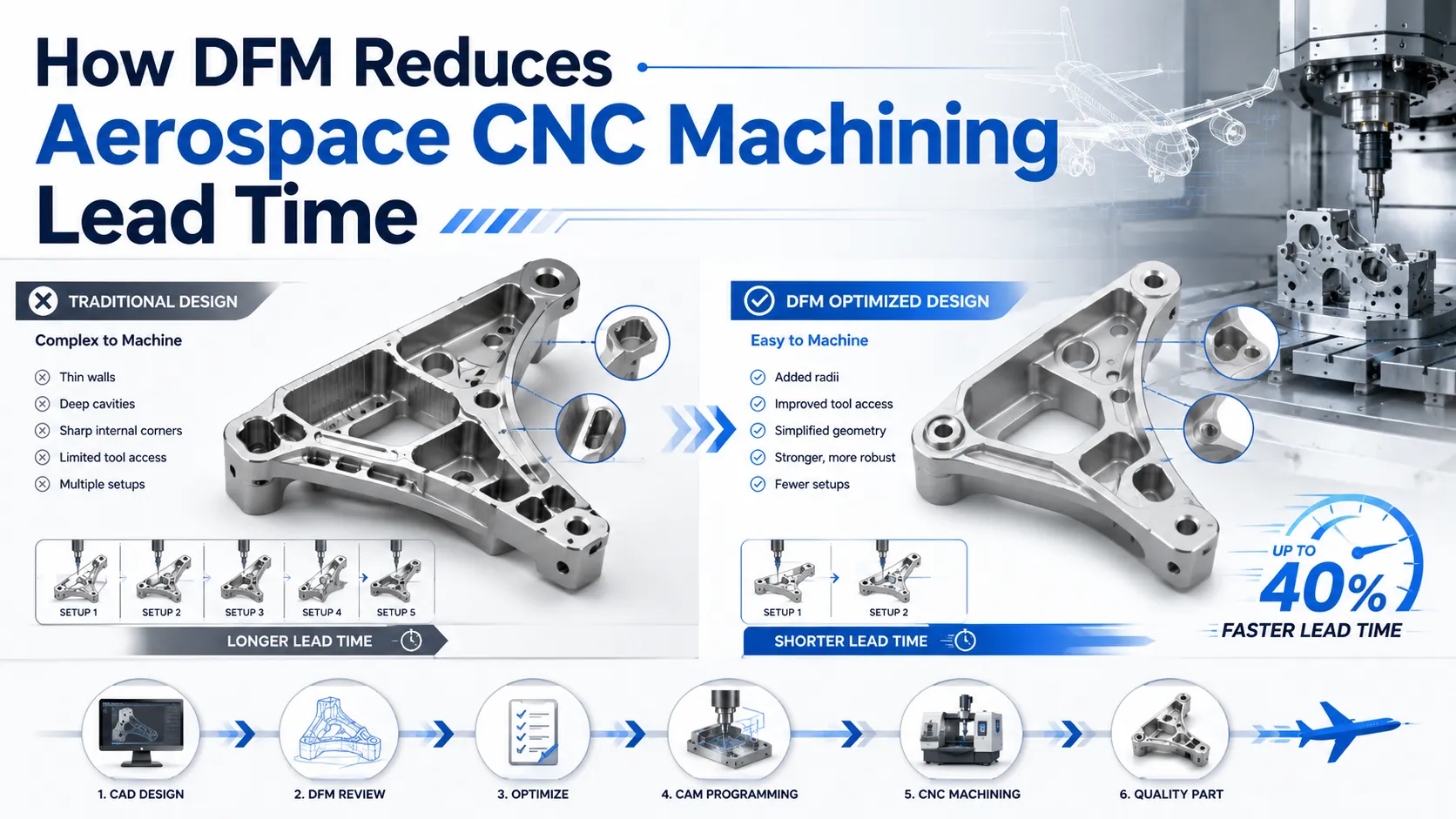
Last week, a customer sent us a part drawing with all sharp internal corners.
In reality, the part was installed inside a machine and never visible.
We suggested changing non-critical sharp corners to standard fillets.
Result? The customer saved 15% in machining cost, and we reduced tool changes. A win-win.
Our honest advice:
Before finalizing your drawing, ask the factory one simple question:
“From a machining perspective, is there anything that can be optimized?”
A good CNC factory doesn’t just say “Yes, we can do it.”
A good factory tells you “Here’s a better way to do it.”
2. “The More Expensive the Material, the Better” — Not Necessarily
A classic case:
A customer ordered laboratory fixtures and insisted on aerospace-grade aluminum.
After discussing the actual application, we switched the material to 6061 aluminum.
Performance was fully sufficient, and cost dropped by 40%.
That’s why, when we receive an RFQ, we always ask:
What environment will the part be used in?
Does it carry load?
Is corrosion resistance required?
Only when we understand the application can we recommend the right material—not the most expensive one.
3. “The Lowest Quote Is the Best Deal” — This Is the Deepest Trap
We understand cost pressure. But a CNC quotation is more than just a number.
Ask yourself:
Are new cutting tools used, or heavily worn ones?
Is heat treatment done properly or simplified?
Is inspection full inspection or random sampling?
Our approach is simple: transparent quotations.
We break down costs clearly—material, machining time, surface treatment.
Transparency builds trust. Professionalism saves you money in the long run.
4. “Surface Finishing? Just Pick One” — Not So Simple
Did you know that even anodizing has multiple types?
Standard anodizing: suitable for indoor parts
Hard anodizing: for wear-resistant applications
Conductive anodizing: for electromagnetic shielding
In our workshop, we keep a surface finishing sample box.
When customers visit, they can see, touch, and compare finishes themselves.
A hands-on comparison is worth more than a hundred explanations.
5. “Skip Prototypes, Go Straight to Mass Production” — Very Risky
This is one of the most dangerous decisions.
Last year, a customer insisted on skipping prototyping.
Result: 500 parts couldn’t be assembled at all.
Prototype cost: 800
Scrap loss in production: 50,000+
Now we always recommend:
“Let’s make 3–5 samples first, verify everything, then move to production.”
A responsible CNC factory is willing to say:
“Slow down a bit—it’s actually faster and safer.”
6. “Push the Lead Time as Hard as Possible” — Quality May Suffer
We understand urgency. Everyone is under schedule pressure.
But machining is like cooking:
A soup that needs 2 hours cannot be done in 1
Aluminum parts that require stress relief will deform if the process is skipped
Our suggestion:
Ask your supplier:
“What is the reasonable lead time for this part?”
“If we need it faster, which steps can be optimized safely?”
Planning together is far more reliable than last-minute pressure.
Final Thoughts: Good CNC Machining Is a Collaboration
Many CNC machining problems don’t come from bad factories.
They come from missing communication before production starts.
A reliable CNC machining partner should:
Ask questions
Give suggestions
Explain trade-offs clearly
If a factory dares to tell you the truth—even when it’s not the easiest answer—
that’s usually the factory worth working with long term.