
When Should You Use 5 Axis CNC Machining? (Real Cases)
Introduction
You should use 5-axis CNC machining when your part cannot be completed within 2–3 setups without causing alignment errors, tool interference, or unstable surface quality.
If your part can be machined using 3-axis or 3+2 methods without risk, 5-axis will usually increase cost by 30%–80% (for simple parts with ≤2 setups and no continuous surfaces) without improving results.
This range is based on typical machining quotes and industry benchmarks.
Key Takeaways
Use 5-axis when ≥3 setups would create tolerance stack-up or instability
Required for continuous curved surfaces that need uninterrupted toolpaths
Necessary when tool access is restricted or interference occurs
Avoid 5-axis for simple prismatic parts (≤2 setups, no complex geometry)
Setup count directly affects risk—each additional setup increases alignment uncertainty and inspection effort
When You Should Use 5 Axis CNC Machining
5-axis machining is justified only when it reduces total manufacturing complexity or eliminates process risk.
1. Continuous Curved Surfaces
Typical Parts
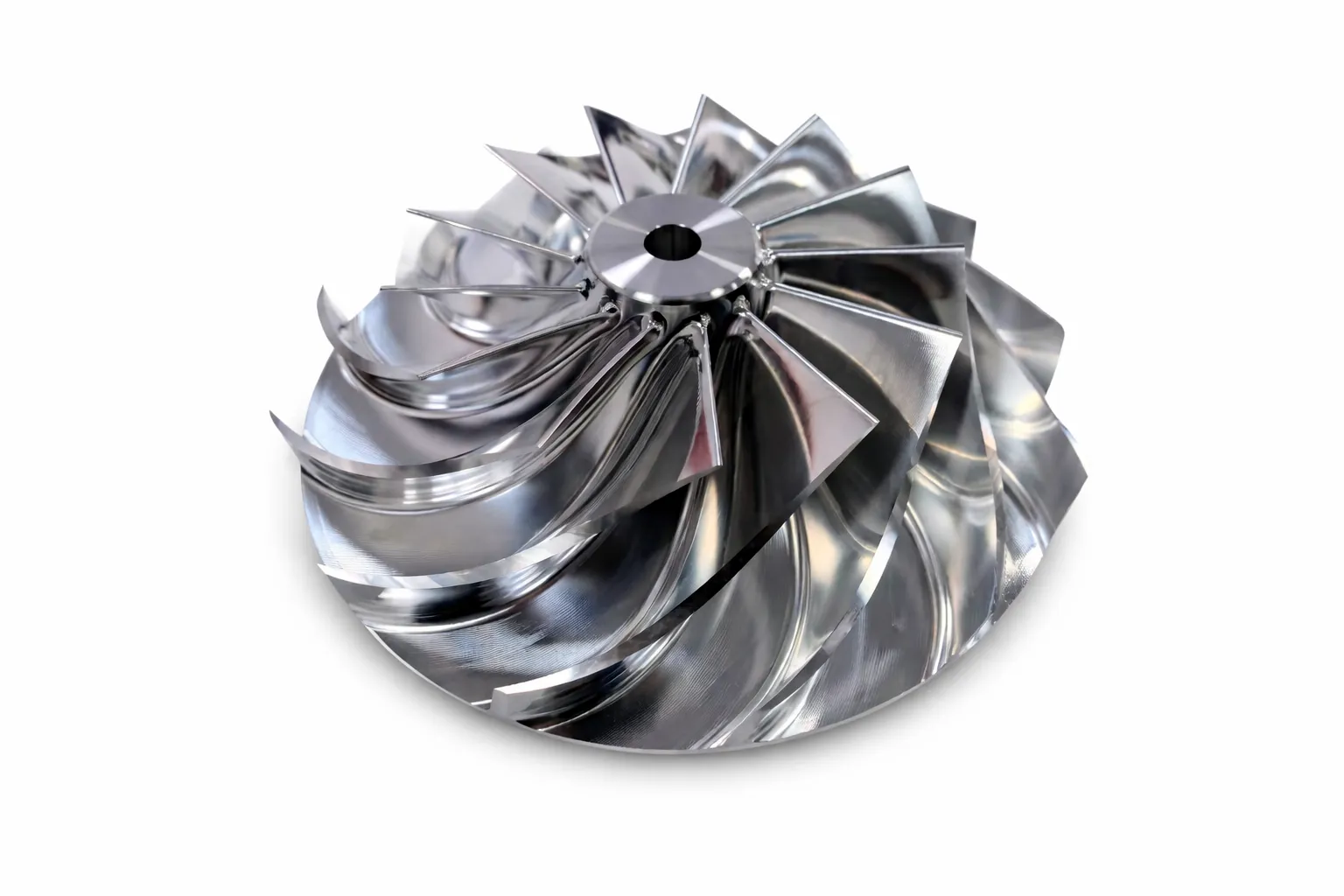
Impellers
Turbine blades
Aerospace structural components
Why It Requires 5 Axis
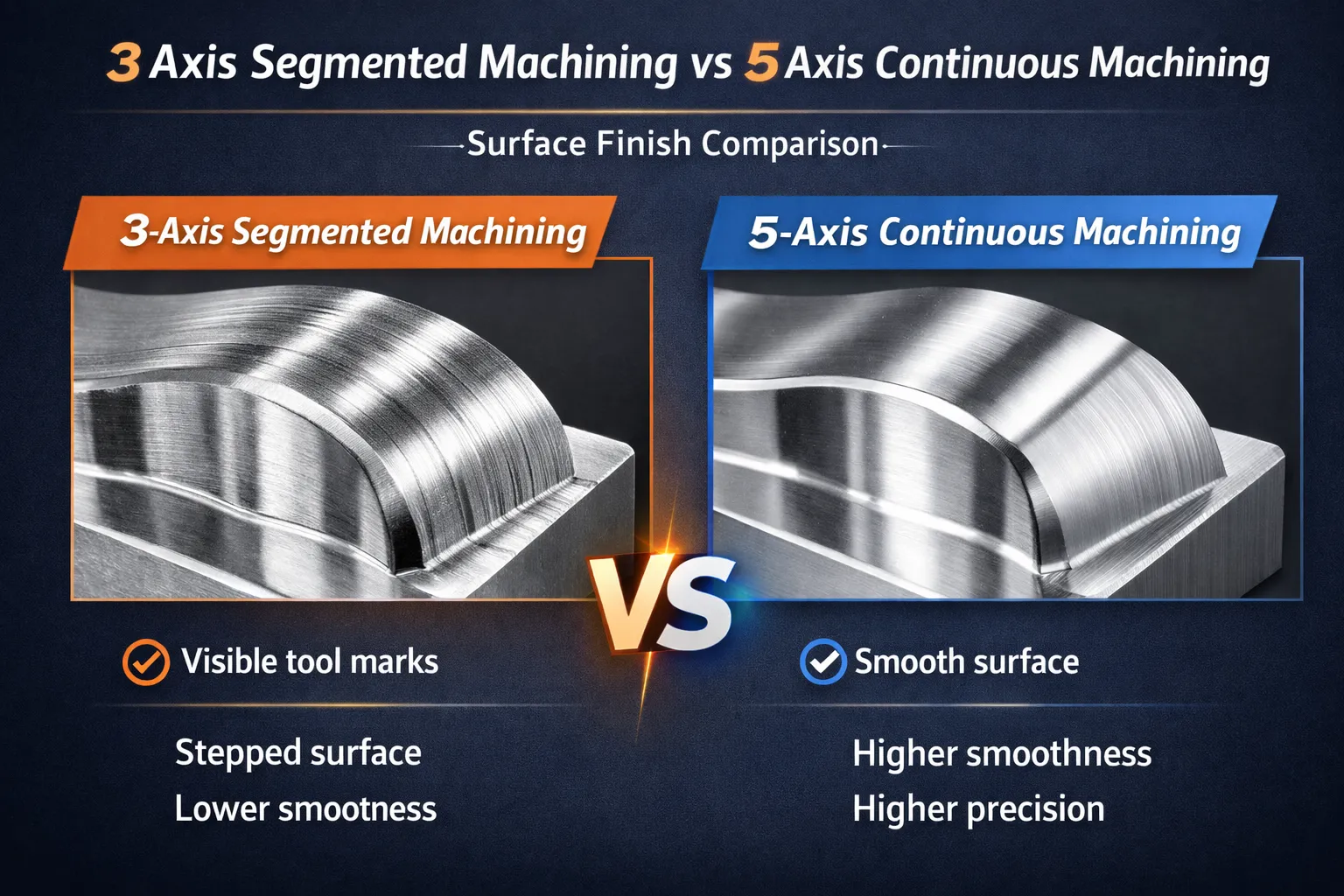
Continuous toolpaths are needed to maintain surface consistency
Segmented machining leads to visible transitions and uneven finish
→ This makes 5-axis the only stable solution.
2. Multi-Face Precision Alignment
Typical Parts
Medical components
Precision housings
Robotic assemblies
Why It Requires 5 Axis
Each additional setup introduces positional variation
Typical deviation per setup: ±0.01–0.03 mm (depending on fixture quality and setup complexity)
Accumulated error affects alignment across multiple faces
→ In this case, 5-axis becomes necessary.
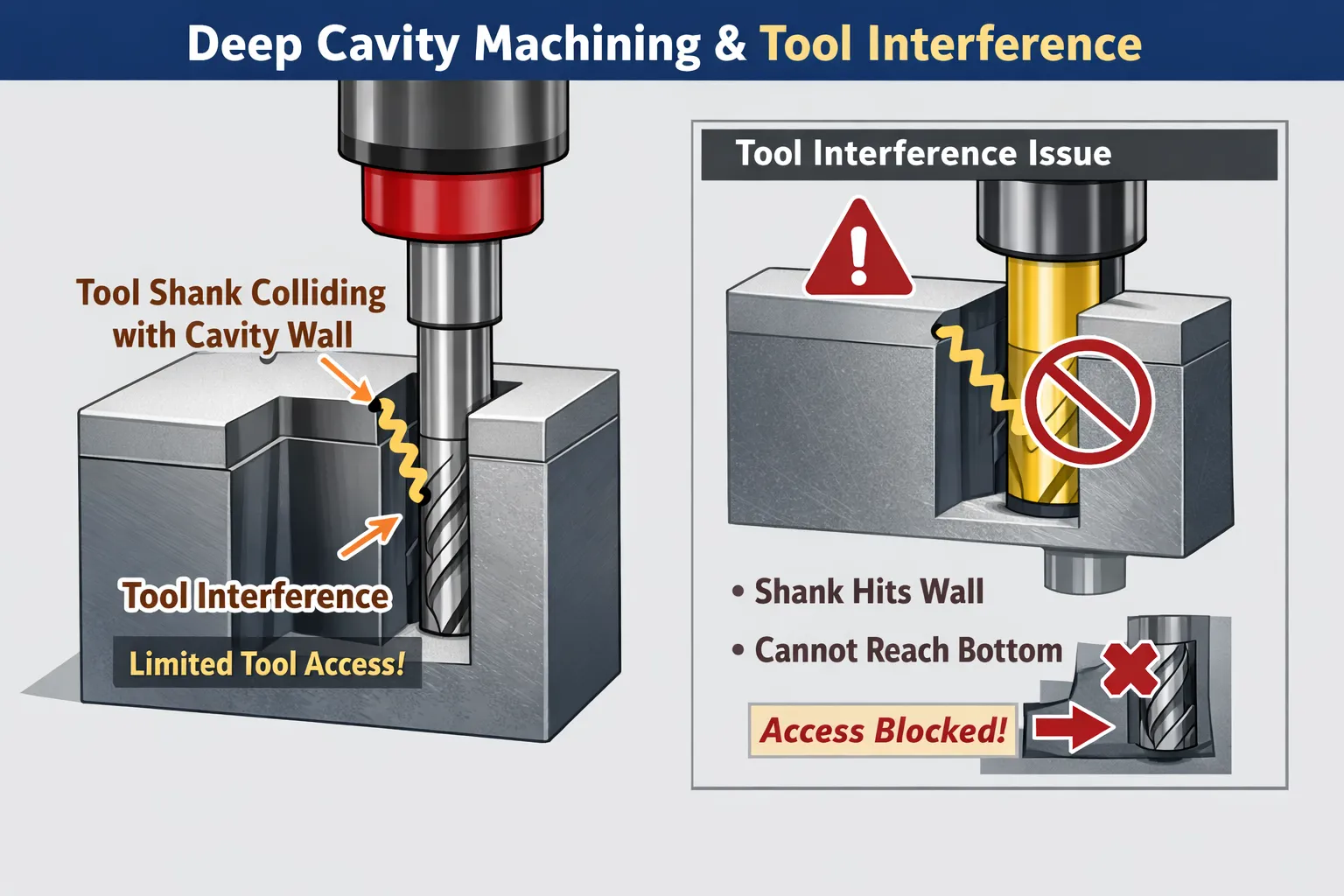
3. Deep Cavities and Limited Tool Access
Typical Parts
Mold inserts
Deep pocket components
Angled internal features
Why It Requires 5 Axis
Standard tool orientation cannot reach features effectively
Tool interference limits machining strategy
Dynamic tool positioning is required for stable cutting
→ This is where 5-axis provides a clear advantage.
4. Single-Setup Requirement for Stability
Typical Scenario
Tight tolerance across multiple surfaces
High consistency required in batch production
Why It Matters
Eliminates re-clamping error
Improves repeatability and reduces inspection effort
→ This makes single-setup machining critical, favoring 5-axis.
When You Should NOT Use 5 Axis (Common Mistakes)
5-axis machining is often overused due to misjudging part complexity.
Typical Cases Where 5 Axis Is Unnecessary
Setup count ≤2
No continuous curved surfaces
Tolerance requirement > ±0.05 mm
Features accessible from standard machining directions
Real Mistake Case
Scenario
A simple aluminum bracket was specified for full 5-axis machining.
Actual Requirement
2 setups
No complex geometry
No tool access limitation
Result
Cost increased by ~40%
No improvement in quality or lead time
Real Case: When 5 Axis Was Necessary
Scenario
A customer required an aluminum impeller with complex blade geometry.
Problem with 3-Axis
Required 4 setups
Tool interference in blade channels
Surface inconsistency between machining passes
5-Axis Solution
Single setup machining
Continuous toolpath across blades
Stable and uniform surface finish
Result
| Metric | 3-Axis | 5-Axis |
|---|---|---|
| Setups | 4 | 1 |
| Surface Quality | Inconsistent | Smooth |
| Lead Time | 12 days | 8 days |
| Total Cost | Higher (rework + correction) | Lower overall |
Without 5-axis, additional setups would likely increase cost by 20%–40% and introduce alignment risk.
Engineer’s Decision Logic (Most Important)
The correct decision depends on setup count, geometry complexity, and machining risk.
Decision Table
| Condition | Recommendation |
|---|---|
| ≤2 setups required | Use 3-axis |
| 3 setups required | Consider 3+2 |
| ≥3 setups + tolerance alignment requirement | Use 5-axis |
| Continuous curved surfaces | Use 5-axis |
| Tool interference present | Use 5-axis |
Engineering Checklist
How many setups are required?
Will repositioning affect tolerance alignment?
Is continuous surface finish required?
Can tool access be achieved without collision?
What Happens If You Choose the Wrong Process
Choosing incorrectly directly impacts cost, quality, and delivery.
Overusing 5 Axis
Cost increases by 30%–80%
Longer programming and setup time
No measurable improvement
Not Using 5 Axis When Needed
Scrap risk increases due to misalignment
Lead time increases due to additional setup cycles and corrections
Total cost may increase by 20%–80% due to rework and instability
FAQ
Is 5-axis always required for complex parts?
No. Complexity must be evaluated based on machining accessibility, not appearance.
Can 3+2 replace 5-axis?
Yes, when continuous motion is not required.
Does 5-axis always improve accuracy?
No. It mainly improves consistency in multi-face machining.
When Should You Choose 5 Axis?
5-axis machining should be used only when it solves a real manufacturing constraint.
If it does not reduce setups, eliminate interference, or improve stability, it is not necessary.
Many buyers only discover this after multiple failed iterations or unexpected cost increases during production.

Upload your CAD file — we will review it as quickly as possible.