What Factors Have the Biggest Impact on CNC Machining Prices?
Where Can You Really “Squeeze the Fat” Out of CNC Machining Costs?
Hi, I’m Jake.
Last time we talked about how CNC machining costs are calculated. Today, let’s go one step further and look at what actually drives the final price.
Once you understand these factors, the next time you review a quotation, you’ll immediately know whether a higher price is truly justified—or simply filled with unnecessary markup.
When two suppliers quote very different prices for the same part, the reason is usually not just “expensive vs. cheap.”
In most cases, it’s a trade-off among five core factors.
Factor 1: Part Complexity – The Hidden Cost of Design
This is often the single biggest price driver.
A simple block and a part full of freeform surfaces, thin walls, deep holes, and fine features are worlds apart in machining difficulty.
Process complexity:
Complex parts require more setups, specialized tooling, advanced programming strategies, and longer debugging time. All of this relies on senior engineering experience—and that has a cost.Fixturing difficulty:
Irregular parts often need custom fixtures to ensure stability during machining. This one-time tooling cost is usually amortized into your order.Yield risk:
Complex geometries are more prone to deformation, vibration, or internal stress issues, increasing scrap risk—which must be priced in.
Buyer tip:
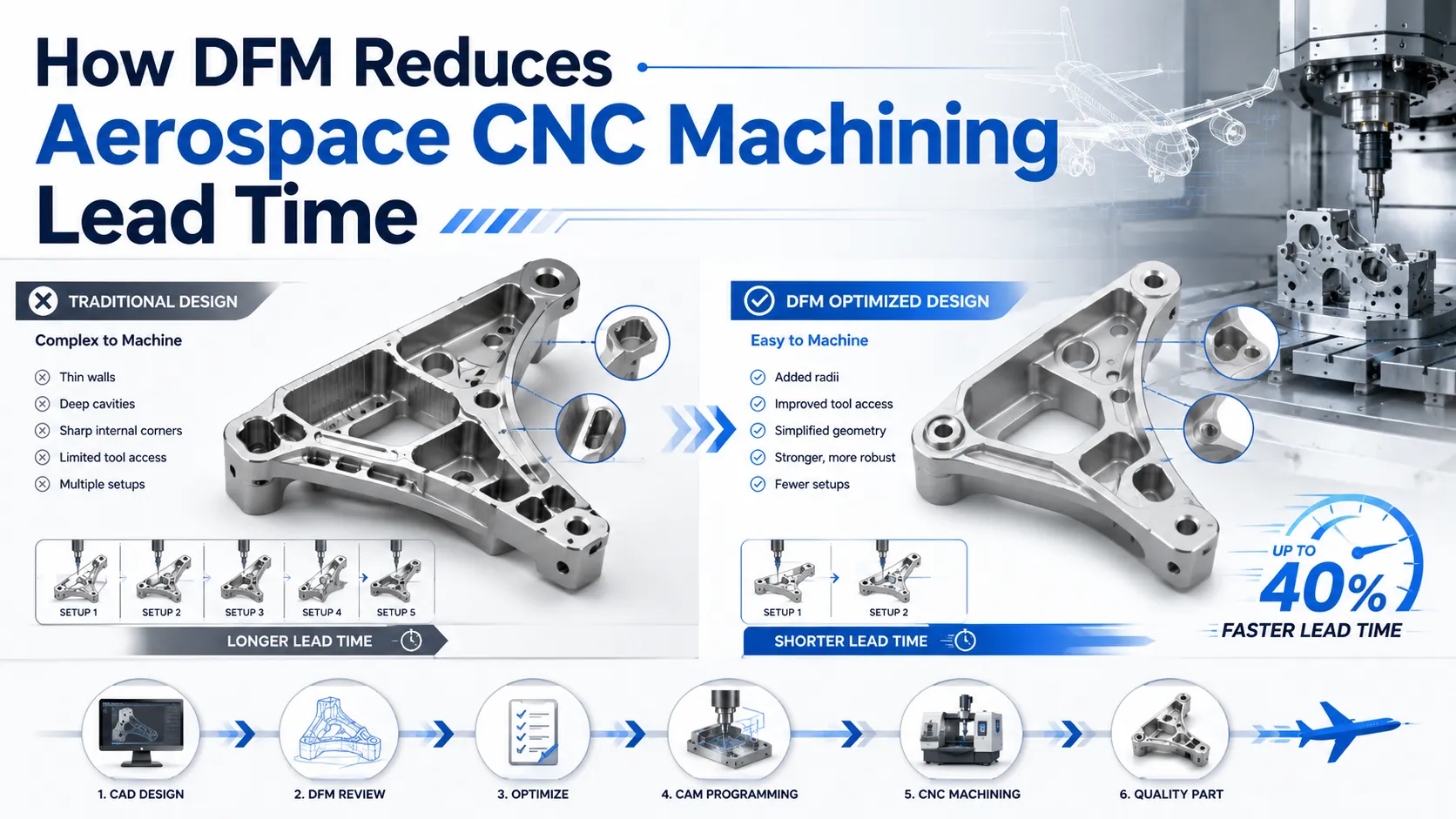
If functionality allows, talk with your design engineer about design-for-manufacturability (DFM) optimization. Small changes—such as adding internal fillets instead of sharp corners or standardizing hole sizes—can significantly reduce machining cost.
Factor 2: Precision & Tolerances – A Non-Linear Cost Jump
When tolerances tighten from ±0.1 mm to ±0.02 mm, the cost increase is not linear—it’s exponential.
Equipment requirements rise sharply:
High-precision machines and advanced inspection tools (such as CMMs) become mandatory.Machining time increases dramatically:
Finer tools, conservative cutting parameters, slower feed rates, and repeated measurements all multiply cycle time.Environmental control matters:
Tight tolerances may require temperature-controlled workshops to maintain thermal stability.
So when you see a noticeably higher quote for tight tolerances, you’re often paying for process certainty, not inflated margins.
Factor 3: Material Selection – Material Price Defines Machining Price
Material choice directly affects both raw cost and machining cost.
Material price differences:
Carbon steel vs. aerospace titanium or medical-grade stainless steel can differ by 10× or more.Machinability:
Harder or “sticky” materials (stainless steel, high-temperature alloys) accelerate tool wear and require slower cutting speeds—both of which increase cost.
Factor 4: Order Quantity – The Double-Edged Scale Effect
Quantity is a powerful lever—but more is not always cheaper.
Cost reduction with volume:
Programming, fixturing, and setup costs are spread over more parts. Machines can run continuously at optimal efficiency.Cost may rise again at very large volumes:
Extremely large orders may require dedicated production lines, special material procurement, or much stricter process control (higher inspection frequency, SPC monitoring), which increases management cost.
A mature supplier should provide a clear price-vs-quantity curve, not just a vague “lower price for higher volume” promise.
Factor 5: Quality & Management Standards – The Invisible Cost
This is the most underestimated—and most dangerous—area for pricing traps.
Inspection level:
Full inspection vs. sampling, SPC monitoring, and detailed shipment reports all require manpower and equipment.Packaging & traceability:
Is the part loosely packed in plastic bags, or protected with custom anti-scratch packaging and traceable labels?Management systems:
Certifications like ISO 9001 bring stability, consistency, and reliability—and that operational discipline has real value.
A Practical Purchasing Perspective
When comparing CNC machining quotations, use these five factors as your evaluation ruler:
Ask directly:
“Which factor contributes most to this price—material, tolerance, or complexity?”Check capability match:
Are your part requirements aligned with the supplier’s strengths? Forcing complex geometry onto basic machines often leads to unstable cost and quality.Focus on total cost of ownership:
Don’t judge by unit price alone. Consider quality risk, delivery reliability, and communication cost.
A slightly higher price with stable processes, complete data, and smooth cooperation is often cheaper in the long run.
Final Thought
Price differences are, at their core, a reflection of how certainty is priced against risk.
By making these pricing factors transparent, we hope to help you make decisions that are not only economical—but also smart and sustainable.
I’m Jake, a partner who believes cost discussions should always be open, clear, and grounded in reality.